When to Use Vinyl Labels for Your Packaging
Choosing a label material is one of the most consequential decisions in packaging design. Get it wrong and you end up with peeling edges, faded print, or a label that can't survive the journey from warehouse to shower shelf. Vinyl labels solve many of these problems. They aren't always the right answer, though. This guide explains what vinyl does well, where it falls short, and how to decide whether it fits your product.
What makes vinyl labels different from paper labels
Vinyl is a synthetic film, usually made from polyvinyl chloride, rather than a wood-pulp based paper stock. That single difference explains almost everything about how the two materials behave once they're on a container.
Paper labels are absorbent. They soak up moisture, tear when they catch on something, and their print can smudge if handled before it's fully cured. Vinyl doesn't have those weaknesses. It's a plastic film, so it resists water, oil, grease and general wear far better than paper does.
That resilience makes vinyl the practical starting point for any product that will face damp conditions, rough handling or a long shelf life. The rest of this guide works from that decision point.
Key properties of vinyl as a label substrate
- Water and moisture resistance, vinyl won't wrinkle, bubble or fall apart when it gets wet.
- Flexibility, it stretches and conforms to curved or tapered surfaces without cracking.
- Tear and scuff resistance, it holds up to repeated handling, transport and shelf abrasion.
- Print durability, ink adheres well and resists fading from UV exposure and rubbing.
- Temperature tolerance, vinyl copes better with cold storage and condensation than paper.
When vinyl labels are the right choice
Vinyl earns its higher cost when the product it's protecting faces a genuinely tough environment. If your packaging will be wiped, splashed, squeezed or stored outdoors, vinyl is usually the sensible default.
Products exposed to moisture, oil or handling
Any product used in a bathroom, kitchen or outdoor setting puts real stress on a label. Personal care and household brands often choose vinyl for products used in showers, kitchens or outdoors, where paper labels would wrinkle or tear within weeks. Shampoo bottles, cleaning sprays, cooler boxes and outdoor equipment all fall into this category.
The same logic applies to industrial and chemical products. Chemical and veterinary product labels typically need vinyl, or a similarly durable film, to survive spills, sanitising wipe-downs and cold-chain handling. If a product is likely to be sprayed, dipped, refrigerated or handled with wet or greasy hands, a paper label is a risk you don't need to take.
Squeeze bottles are another common case. They flex constantly during use. A rigid or absorbent label will crack or lift at the seams long before the product inside is finished.
Curved or irregular containers
Vinyl's flexibility also matters on shape. Round bottles, tapered jars and contoured containers need a label that can stretch around the curve without creasing at the edges. Vinyl conforms to these shapes cleanly, keeping the print flat and legible from every angle. Paper, by contrast, is stiffer and lifts more easily at seams on anything but a flat or gently curved surface.
When paper or alternative labels make more sense
Vinyl isn't the right choice for every job, and a good packaging partner will tell you that upfront. Paper roll labels remain the more economical option for dry, indoor products with a shorter shelf life or limited handling.
Short-run promotions, seasonal packaging and one-off product launches often don't need the durability vinyl offers. If the label's job is done once the product sells through in a few weeks, paying a premium for water resistance is money spent solving a problem you don't have.
Dry goods stored indoors, such as boxed foods, dry snacks or ambient retail items, also tend to work well on paper. The same applies to cost-sensitive runs where margins are tight and the product won't face moisture, grease or rough handling. In these cases, paper delivers a clean, print-sharp finish at a lower unit cost, without compromising the customer experience.
Vinyl label finishes and adhesives to consider
Once you've decided vinyl is the right substrate, the next decisions are finish and adhesive. Both affect how the label looks and how well it performs over the product's life.
Gloss, matte and clear vinyl options
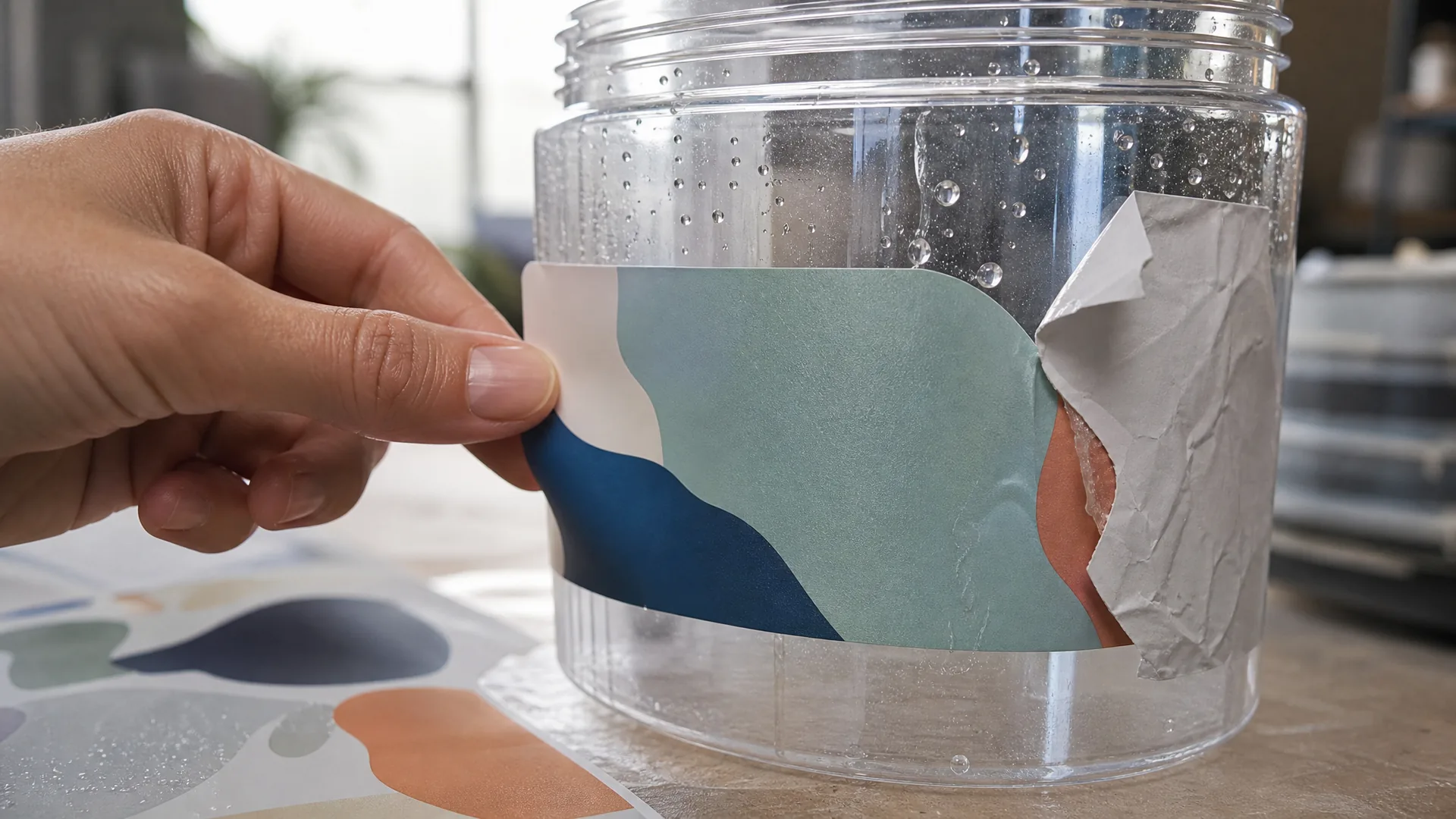
Gloss vinyl gives colours more vibrancy and works well for retail shelf presence. Matte vinyl offers a softer, more premium look and resists fingerprints and glare better under store lighting. Clear vinyl creates a "no-label look" that lets the container itself show through, and many personal care and premium household brands use it to signal quality. The right choice depends on branding goals as much as durability, so it's worth reviewing finish options in more depth before committing to a print run.
Adhesive choice for the container material
Adhesive selection matters as much as the film itself. A label that's perfectly durable but poorly adhered will still fail. Glass containers generally need a stronger, permanent adhesive to handle condensation and refrigeration. HDPE, common in bottles for cleaning and personal care products, has a lower surface energy and needs an adhesive formulated to bond properly with plastic. PET, used widely for beverage and cosmetic packaging, sits somewhere between the two and usually pairs well with a general-purpose permanent adhesive.
Getting this match wrong is one of the most common causes of labels lifting or peeling after a few weeks in the field. Confirm adhesive compatibility with your container material before production begins.
Cost and lead time considerations for vinyl labels
Vinyl labels generally cost more per unit than standard paper roll labels, but that premium is usually offset by lower spoilage and re-labelling costs on long-life or exposed products. If a paper label fails in transit or on shelf, the cost of replacing stock, reprinting and re-applying labels can quickly outweigh the initial saving.
Lead times for vinyl are broadly comparable to paper for standard runs, though specific finishes or adhesive combinations can add a small amount of production time. If you're working to a tight launch date, discuss turnaround and cost details early so the material choice doesn't become a bottleneck later in the process.
How Gateway helps you choose the right label material
Choosing between vinyl and paper isn't a decision to make in isolation from your container, your storage conditions and your production volume. Gateway advises FMCG brands running 2,000–50,000 unit production runs on matching label substrate to container material and end-use environment before print. That advice covers adhesive selection, finish, and how the label will hold up once it leaves the warehouse.
If you're planning a new product launch, or reviewing an existing label that isn't performing, talk to Gateway before you commit to a print run. Getting the substrate and adhesive right the first time avoids reprints, wasted stock and delays to your launch date.