Vinyl Labels for Products South Africa
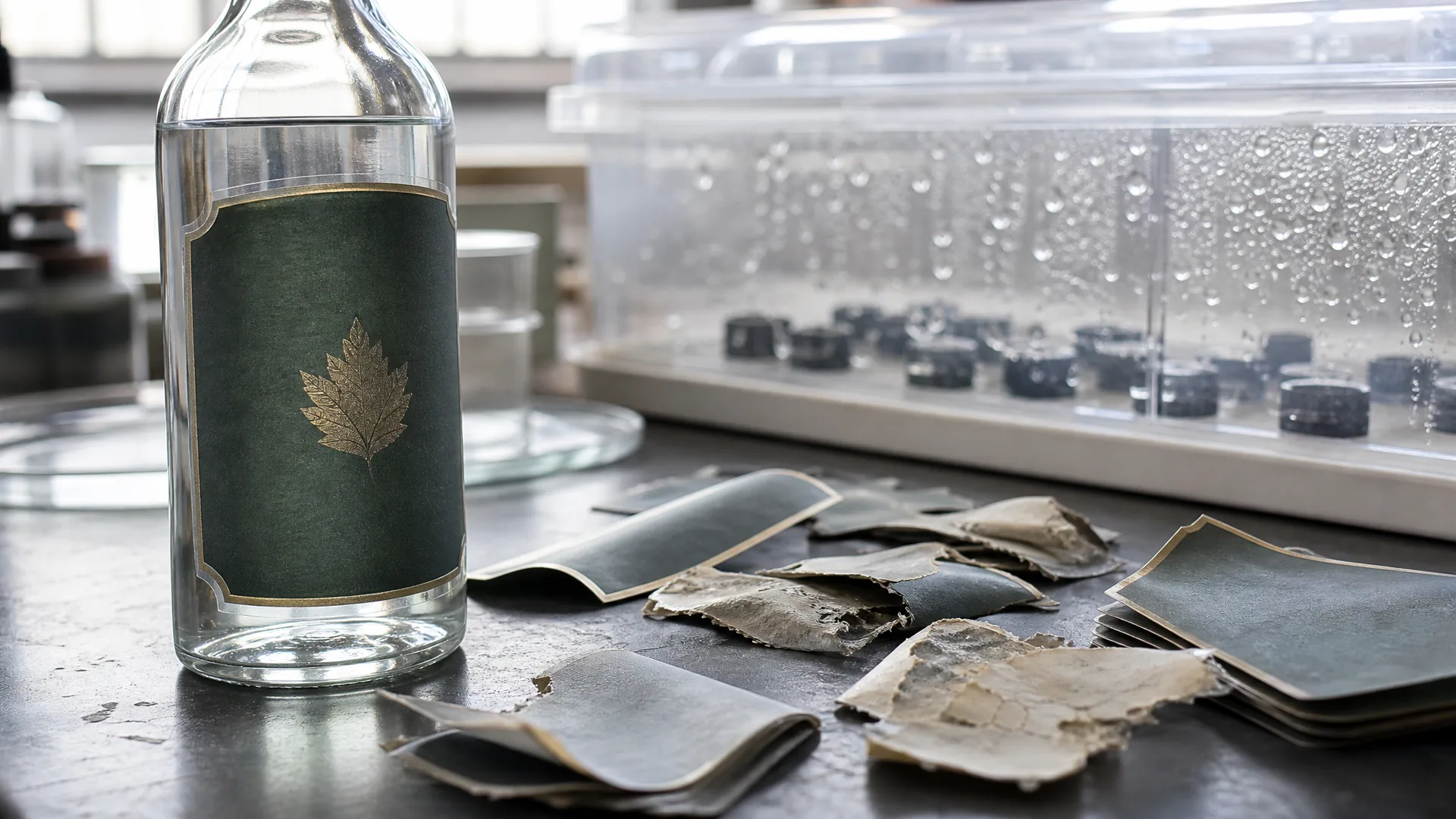
Choosing the wrong label stock for a product is a mistake that shows up fast, labels lifting off bottles in the fridge, faces delaminating in the shower, or finishes fading on shelf within weeks. For brand managers sourcing vinyl labels for products in South Africa, the material decision is not a minor print spec. It shapes how a product performs in its actual environment and how it presents to consumers at the point of sale.
This guide covers what separates vinyl from paper, which product categories demand vinyl as standard, and what to include in your brief to get a quote that fits your real-world requirements.
Why Label Material Choice Matters for FMCG Brands
A label is the most immediate expression of a brand in the hands of a consumer. It has to survive the journey from production through warehousing, retail, and end use, which often means humidity, handling, and chemical exposure.
The wrong substrate leads to predictable failure modes: bubbling adhesive, peeling edges, ink that scuffs or fades. None of these are minor aesthetic issues. A label that looks premium in the studio but lifts, bubbles, or fades on shelf does more damage to a brand than no redesign at all. Material selection is part of brand strategy, not an afterthought.
For FMCG brands specifically, shelf presence and product durability have to coexist. That means specifying a label stock that matches the product's environment from day one.
Vinyl vs Paper Labels: Understanding the Core Difference
The core distinction is simple: vinyl is a flexible, moisture-resistant film substrate, while paper is an absorbent, cellulose-based sheet. Both print well. They behave very differently in the real world.
What makes vinyl labels more durable than paper?
Vinyl labels, typically produced in BOPP (biaxially oriented polypropylene) or cast vinyl, have several structural advantages over paper:
- Moisture resistance. Vinyl does not absorb water. Paper does, which causes softening, wrinkling, and adhesive failure.
- Tear resistance. Film substrates flex without tearing. Paper tears along stress points, edges, cuts, or folds.
- Chemical resistance. Cast vinyl holds up against cleaning agents, oils, and solvents that degrade paper rapidly.
- Dimensional stability. Vinyl maintains its shape through temperature fluctuations. Paper expands and contracts with humidity.
Household cleaning products and veterinary sprays are a practical benchmark: labels are routinely exposed to moisture, chemical splash, and handling during use. Those conditions cause standard paper to delaminate within weeks but leave cast vinyl intact.
When paper labels are still the right call
Paper is not an inferior choice, it is simply the right choice for specific conditions. If a product is sold in a dry ambient environment, has a short shelf life, or is positioned as a craft or natural product where paper aesthetics align with the brand, paper can be appropriate and more cost-effective.
Dry grocery, ambient confectionery, and boxed goods in secondary packaging are common examples. For custom printed product labels in South Africa across categories like these, paper stock often delivers strong print quality at lower material cost.
The deciding factor is always the product's environment. Dry and ambient? Paper is a viable option. Wet, chilled, or chemically active? Vinyl is the correct specification.
Choosing Vinyl Product Labels by Application and Environment
Different environments impose different demands. The categories below consistently require vinyl as standard, not as a premium upgrade.
Waterproof and wet-environment products: bottles, sprays, and cleaning agents
Beverages, household cleaners, and spray-format products share one challenge: the label must survive contact with its own product or its storage environment.
Glass and PET bottles sweat in the fridge. Spray products drip. Cleaning agents splash. In each case, a paper label fails visibly and quickly. Waterproof vinyl labels, most commonly BOPP, are the industry standard for these categories because the substrate performs where paper cannot.
For labels for bottles in South Africa, BOPP gloss is the most widely used specification: it provides strong colour reproduction, moisture resistance, and a clean finish that suits both retail and foodservice environments. Cast vinyl is used for products with more extreme exposure, such as industrial-grade cleaners or veterinary applications where higher chemical resistance is required.
Cosmetics, personal care, and nutraceuticals
These categories add complexity beyond moisture. Products are handled repeatedly, in the shower, gym bag, or daily supplement routine, and labels need to maintain their appearance through sustained contact with water, oils, and friction.
Cosmetic ranges sold through retail chains often combine a gloss vinyl face stock with a soft-touch laminate to achieve a tactile premium feel. That finish combination cannot be replicated on paper with the same durability or consistency. The result is a label that reads as premium both visually and physically.
Nutraceuticals and supplements present their own challenge. Products often go through the fridge, chilled protein shakes, liquid supplements, refrigerated probiotics, and bottle surfaces accumulate condensation. Condensation on the container surface prevents standard adhesives from bonding correctly. Specifying a cold-surface adhesive at the brief stage eliminates this failure mode entirely.
Gateway Print & Packaging produces vinyl roll labels across cosmetics, nutraceuticals, household products, and personal care for run sizes from 2,000 to 50,000 units, where durability and shelf presence are non-negotiable.
Finishes, Adhesives, and Print Options for Custom Vinyl Labels
Once you have confirmed vinyl as the substrate, finish and adhesive choices shape both the shelf appearance and the functional performance of the label.
Gloss is the most common finish for durable product labels. It enhances colour saturation, reads as clean and clinical, and suits beverages, personal care, and household products.
Matte provides a flat, understated look that works well for premium cosmetic and nutraceutical brands. It photographs better than gloss and signals quality to a specific consumer audience.
Soft-touch laminate adds a tactile element, a velvety surface that feels premium in the hand. It is a common specification for cosmetics sold through pharmacy and department store channels. The tradeoff is cost; soft-touch lamination adds to unit price and is most justified for products at mid-to-high retail price points.
On adhesive selection:
- Permanent adhesive is standard for most product categories. It bonds reliably across clean, dry surfaces.
- Cold-surface or low-temperature adhesive is required for chilled or frozen products where the container surface is below ambient temperature at application.
- Removable adhesive suits reusable containers or promotional label overlays where clean removal is expected.
Getting adhesive specification wrong is one of the most common, and most avoidable, causes of label failure. It should be confirmed at the brief stage, not after the labels have been printed.
What to Expect: Run Sizes, Lead Times, and Artwork Requirements
For vinyl roll labels, minimum run sizes typically start at 2,000 units. This threshold exists because vinyl label production carries plate or digital press setup costs that need to amortise across a minimum quantity. Below this volume, unit costs rise sharply and production efficiency drops.
Run sizes from 2,000 to 50,000 units are typical for FMCG brands, covering boutique cosmetic launches through to established household product lines with regular replenishment cycles. Larger runs reduce unit cost meaningfully, so brands with predictable volume should factor that into their forecasting.
Lead times for custom vinyl labels depend on whether artwork is print-ready or requires design work. As a working assumption:
- Print-ready artwork with an approved dieline: 7–12 working days from artwork sign-off.
- Artwork requiring adjustment or dieline creation: add 3–5 working days before production begins.
Artwork requirements for vinyl labels are consistent with standard roll label production: print-ready PDF or AI files, with bleed and crop marks, all fonts outlined, and colour profiles in CMYK. If your label includes a barcode, provide it as a vector at the correct EAN or UPC format, confirmed scannable at 100% size. Barcodes supplied as low-resolution rasters are one of the most common causes of artwork delays, worth checking before submission.
If you also need outer cartons to complement your product labels, reviewing your folding carton packaging options alongside your label brief allows for consistent material and finish planning across the packaging system.
How to Brief a Label Supplier: A Practical Checklist
A complete brief removes ambiguity and gets you to an accurate quote faster. Include the following when approaching a label supplier:
Product and substrate
- What is the product? (beverage, cosmetic, cleaning agent, nutraceutical, etc.)
- What is the container material? (glass, PET, HDPE, aluminium)
- What is the container shape? (cylindrical, tapered, flat, irregular)
Environment and use conditions
- Will the product be chilled or frozen?
- Is the label exposed to moisture, water, oils, or chemicals during use?
- Is it an outdoor or indoor product?
Label specification
- Preferred substrate: BOPP gloss, BOPP matte, cast vinyl, or other
- Finish: gloss, matte, soft-touch laminate, varnish
- Adhesive: permanent, cold-surface, removable
Print and compliance requirements
- Number of colours or digital full-colour
- Any foil, embossing, or special finishes
- Barcode format required (EAN-13, UPC-A, QR, etc.)
- Any regulatory text required (batch/lot, country of origin, warnings)
Commercial requirements
- Total quantity required
- Label dimensions (if known) or container dimensions for dieline creation
- Required delivery date
This checklist also serves as the foundation for your packaging design brief requirements if design work is needed before production.
Getting vinyl labels right the first time is about matching specification to environment, not selecting the most expensive option or defaulting to what was used last time. If you are launching a new product or reviewing label performance on an existing range, Gateway Print & Packaging can advise on substrate, finish, and adhesive from a single brief.
Contact our team with the checklist above and we will come back to you with a clear recommendation and a quote that fits your actual requirements.