Shrink Sleeve Labels South Africa: When They Make Sense
Shrink sleeve labels in South Africa offer a distinct advantage for brands that need packaging to do more than display information. Standard roll labels serve many purposes well, but they cannot conform to complex container shapes or provide full-body coverage without visible seams. For established FMCG manufacturers and brand owners managing production runs between 2,000 and 50,000 units, shrink sleeves are a strategic middle ground between premium shelf impact and commercial viability. Understanding when this technology outperforms traditional labelling is essential for balancing aesthetics, functionality and cost.
What Shrink Sleeve Packaging Is and How It Works
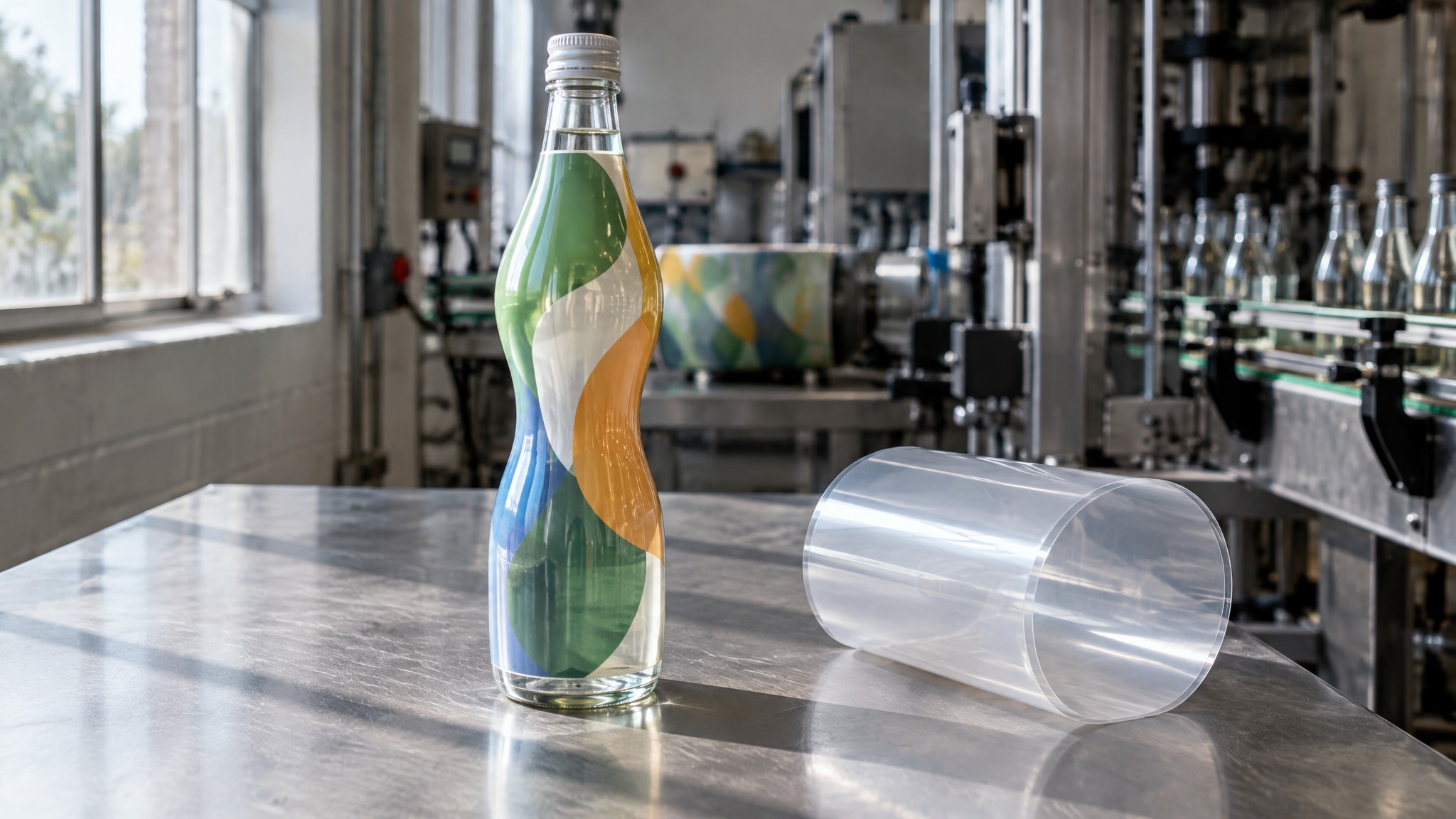
Shrink sleeve packaging means printing artwork onto a continuous tube of plastic film that slides over a container before passing through a heat tunnel. The heat causes the film to contract tightly against the vessel's surface, creating a seamless second skin that follows every curve and contour. The label relies on mechanical tension rather than glue, which is why it avoids the adhesive failures you get on textured or oily surfaces. You'll find this format particularly effective when your product design demands uninterrupted graphics across the entire package.
The Heat Application Process
Uniform shrinking without distortion takes precise temperature control. Production lines typically use steam or hot air tunnels calibrated to the specific film type and bottle geometry. Inconsistent heat causes puckering or uneven lay-flat, so operators monitor line speed and tunnel zones continuously, since even minor fluctuations can compromise the finish. This is why supplier expertise matters far more here than it does for simple self-adhesive labelling.
Common Film Materials for SA Climates
South African summers and variable supply chain conditions demand films that stay stable after application. Polyethylene terephthalate glycol (PETG) is widely used for its high shrink percentage and clarity, which suits the deeply contoured bottles common in personal care and nutraceuticals. Polyvinyl chloride (PVC) is a lower-cost alternative with good durability, though its narrower shrink range limits it on extreme curves. Choosing the right material prevents splitting during transit or storage in warehouses without climate control, a practical reality for many local distributors.
When Full Body Labels Outperform Standard Roll Labels
Full body labels for bottles justify their higher unit cost only when specific functional or aesthetic requirements make standard options inadequate. A shrink sleeve labels vs roll labels comparison shows the premium pays off most clearly on irregularly shaped containers, where adhesive labels wrinkle, flag or leave unprinted gaps. If your bottle is cylindrical and smooth, a roll label likely delivers better value. If it has waists, flares or trigger sprays, sleeves solve problems adhesive can't.
Maximising Design Space on Curved Containers
Shrink sleeves conform to complex geometries like trigger sprays and curved cosmetic bottles where adhesive labels fail. This 360-degree coverage turns the entire container into a branding canvas, letting designers place regulatory text on the back panel without sacrificing front-of-pack impact. Brands launching premium ranges often use this extra space to stand out on crowded shelves, where flat labels blend together. The seamless finish also reads as quality to consumers, who tend to associate uninterrupted graphics with higher-end products.
Durability in Wet or Oily Environments
Products exposed to moisture, oils or refrigeration condensation benefit from the resistance shrink films have to these elements. Unlike paper-based roll labels, which degrade or delaminate when wet, PETG and PVC sleeves hold their integrity throughout the product's life. That matters for household cleaners, automotive fluids and refrigerated beverages, where label legibility affects both consumer trust and regulatory compliance. Your customers expect the packaging to look as good at the end of use as it did on the shelf.
Shrink Sleeve vs Roll Label Cost Considerations
Production runs between 2,000 and 50,000 units typically suit established FMCG brands balancing premium quality with cost efficiency. Below that threshold, plate costs and minimum order quantities can make sleeves prohibitively expensive next to digital-printed roll labels. Above it, the per-unit savings from flexographic printing often offset the higher material cost, especially once you factor in reduced waste from misapplied adhesives. Budget for both the label and the application equipment or contract packing fees it requires.
Tamper Seal Shrink Sleeves for Product Safety
Tamper seal shrink sleeves build security features directly into the primary label, removing the need for separate induction seals or wrap bands. That cuts the component count, simplifies the packing line, and still gives visible evidence of interference. For food, beverage and pharmaceutical brands working under strict safety regulations, this single application step covers both compliance and consumer confidence.
Integrated Tamper-Evident Bands
An extended sleeve carries a perforated band above the main graphic area that sits snugly against the bottle neck or cap closure. Consumers have to tear along this perforation to reach the product, leaving a clear sign if someone has tampered with it. This removes the risk of missing or misaligned secondary seals that multi-component systems can suffer. It also keeps every visual element within one cohesive design.
Regulatory Compliance for Food and Pharma
South African health and safety standards increasingly call for demonstrable tamper evidence on consumable products. Shrink sleeves meet that requirement without the added cost and complexity of separate security components. Nutraceutical and over-the-counter medicine brands benefit in particular, since the approach satisfies regulatory auditors without compromising shelf appeal. Our guide to tamper-evident packaging solutions sets out where sleeves fit within a broader safety strategy.
Shrink Wrap Label Printing Technologies Explained
Shrink wrap label printing uses two distinct technologies, each suited to different volumes and SKU profiles. Matching your print method to your actual production needs stops you overspending on plates you don't need, or accepting patchy colour consistency on long runs. Gateway offers both digital and flexographic printing, matched to your run size and SKU complexity, so you pay only for what the project genuinely requires.
Digital Printing for Short Runs and SKUs
Digital printing drops plate costs entirely, which makes it viable for runs as low as 2,000 units, or for brands juggling numerous flavour variants. It excels when you need fast turnaround for market testing, seasonal promotions or limited editions, where flexibility matters more than exact colour matching. Digital ink costs stay higher per unit than flexo, though, so the breakeven point typically sits around 10,000 to 15,000 units depending on design complexity. Our piece on choosing the right print technology will help you match the method to your current volume and growth plans.
Flexographic Printing for High Volume Consistency
Flexographic printing uses custom plates to deliver better colour accuracy and lower per-unit costs at scale. Once you've amortised the plate investment across larger volumes, flexo becomes significantly more economical for established SKUs with predictable demand. The trade-off is longer setup times and less agility for last-minute artwork changes, so it suits core range products better than experimental launches. Brands that need consistent colours across tens of thousands of units will find flexo delivers a reliability digital can't yet match at that scale.
Design and Artwork Requirements for Sleeves
Designing for shrink sleeves needs pre-press knowledge that differs fundamentally from flat label artwork. Distortion correction in pre-press is mandatory. Without it, logos stretch vertically during the heat tunnel process and come out warped on the finished product. Because of this, standard graphic designers without sleeve experience frequently hand over files that look correct on screen but fail in production.
Accounting for Distortion on Contoured Bottles
Pre-press operators apply distortion grids that pre-warp artwork in the opposite direction to the expected shrinkage, so the final result sits proportionally correct. Safe zones need to stay clear of high-shrink areas like necks and bases, so critical text or barcodes don't become unreadable. These adjustments are mathematical, not artistic, and need software calibrated to the chosen film and container profile. Our guide on preventing costly artwork mistakes is worth checking before you commit, since reprint costs dwarf the original design fee.
Colour Management on Plastic Films
Plastic films interact with ink differently than paper substrates, which affects colour density and vibrancy. Proofing on actual sleeve material, rather than paper stock, shows how colours will truly look after shrinking and sealing. Brand managers should approve physical proofs under controlled lighting to avoid surprises on the production line. This extra check protects brand equity and helps the finished product get accepted on delivery.
Choosing a Reliable Shrink Sleeve Supplier in South Africa
Picking a supplier means weighing up more than price per thousand units. Local application facilities cut lead time risk and allow quicker fixes when quality issues crop up, compared with import-only models. Established brands do better with partners who understand FMCG timelines and have a track record with similar product categories.
Evaluating Local Application Capabilities
Suppliers with in-house sleeving lines can coordinate printing and application under one roof, which cuts handoff delays and keeps accountability clear. Import-dependent suppliers may quote attractive prices but expose you to port delays, customs holds and currency swings that disrupt your production schedule. Check whether your supplier owns the application equipment or subcontracts it, since that directly affects their ability to guarantee turnaround. Ask for references from brands with comparable volume and complexity to verify what they claim.
Lead Times and Supply Chain Reliability
Consistent delivery matters more than occasional speed when you're planning retail launches and promotional windows. Ask potential suppliers about their raw material sourcing and buffer stock policies for common films. Suppliers who hold local inventory of key substrates can absorb international supply disruptions without touching your schedule. Reliability here is as much about predictable communication as physical delivery, so judge responsiveness during the quoting phase as an early signal of ongoing service.
Assessing Suitability for Your Product Range
Not every product benefits from shrink sleeves, and knowing when they're unnecessary frees up budget for investments that deliver a real return. Simple cylindrical containers with no moisture exposure and minimal security concerns are better served by conventional roll labels. Save sleeves for situations where shape, environment or safety requirements create a genuine functional advantage that justifies the premium.
If your assessment confirms shrink sleeves suit your product, the next step is accurate costing based on your container, volume and artwork. Engaging a specialist early lets you validate design assumptions before committing to plate production or large-scale printing. You can request an accurate packaging quote to find out whether shrink sleeves fit your commercial objectives and production timeline.
Frequently Asked Questions
What container shapes require shrink sleeves instead of roll labels?
Containers with significant tapering, waists, flares, or trigger spray mechanisms need shrink sleeves because adhesive labels cannot conform without wrinkling or lifting. Cylindrical bottles with straight sides generally work better with standard roll labels unless full-body coverage or tamper evidence is required. The deciding factor is whether the container geometry creates surfaces where adhesive cannot maintain consistent contact.
How does shrink sleeve pricing compare to roll labels for mid-sized runs?
For runs between 2,000 and 50,000 units, shrink sleeves carry a higher per-unit cost than roll labels due to material expense and application complexity. Digital printing makes shorter sleeve runs economically viable by eliminating plate costs, while flexographic printing reduces the per-unit gap at volumes above 15,000. The true comparison should include total landed cost including waste, application labour, and any secondary components that sleeves might replace.
What artwork adjustments prevent distortion on contoured bottles?
Pre-press distortion correction applies calculated warping to artwork so it appears proportional after shrinking, using grids specific to the bottle profile and film type. Critical elements like barcodes and legal text must sit within safe zones away from high-shrink areas such as necks and bases. These corrections require specialised software and expertise that generalist designers typically lack, making specialist pre-press review essential.
When should I choose digital over flexographic printing for sleeves?
Digital printing suits runs below 10,000–15,000 units, multiple SKU variants, or projects requiring rapid turnaround without plate investment. Flexographic printing becomes more cost-effective above that threshold for stable SKUs where colour consistency and lower per-unit cost outweigh setup time. The crossover point depends on design complexity and colour count, so obtain quotes for both methods when near the boundary.
How do integrated tamper-evident bands work within a sleeve?
A perforated section extends above the main graphic area and contracts around the bottle neck or cap closure during heating. Consumers tear along this perforation to open the product, leaving visible evidence if tampering has occurred. This eliminates separate induction seals or wrap bands while maintaining brand continuity across the entire package.