Self-Adhesive Labels Vs Printed Cartons: Which Suits You?
Choosing between self-adhesive labels and printed cartons is rarely just an aesthetic decision for established FMCG brands. The format you select dictates your unit economics, your regulatory compliance strategy, and how smoothly your packing line runs. Both serve to identify and sell your product, but they do fundamentally different jobs within the packaging hierarchy. Get the distinction wrong and you end up with a format that doesn't match your actual production requirements.
Defining Primary and Secondary Packaging Roles
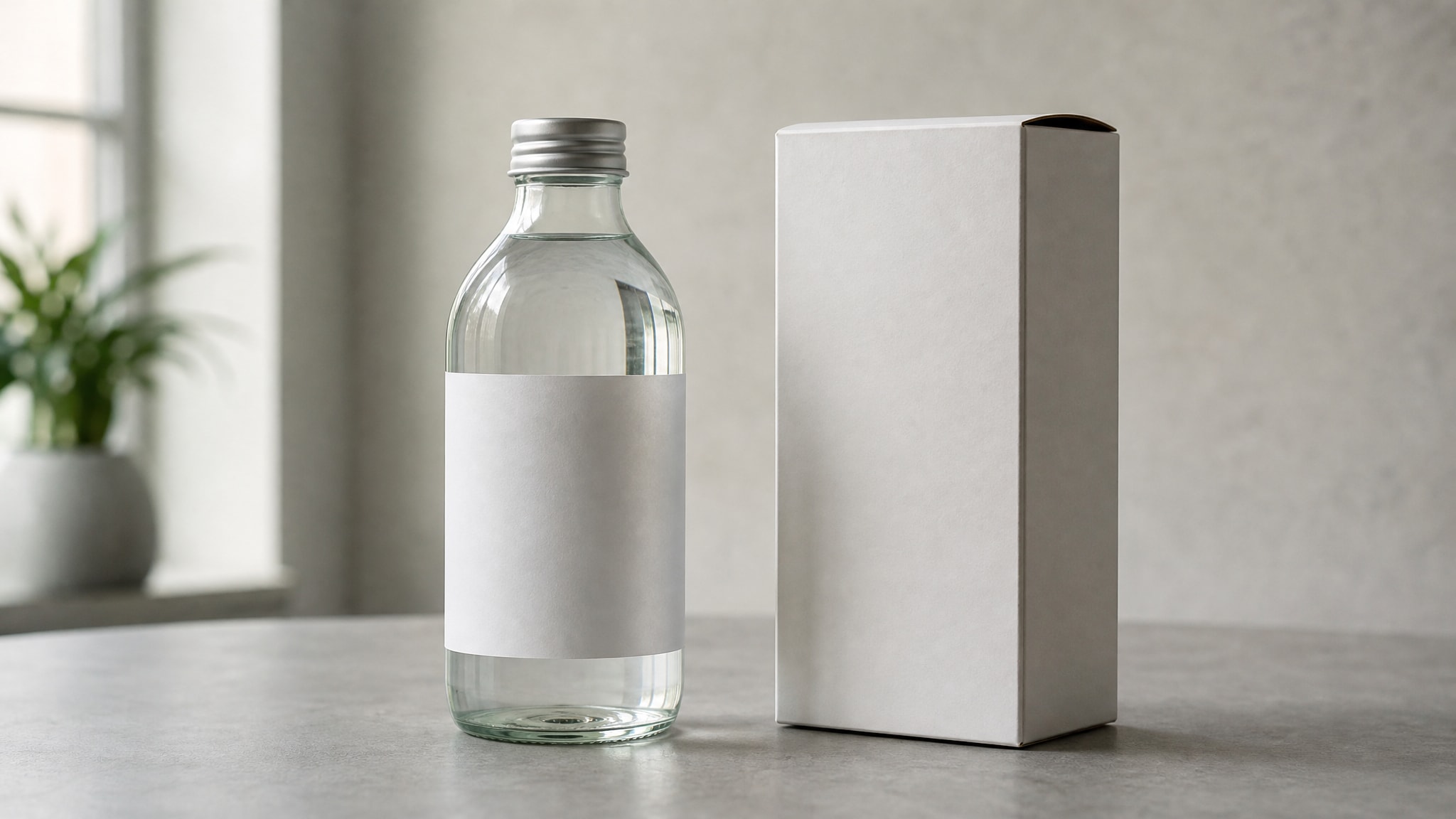
Self-adhesive labels identify what's inside a container. Printed cartons protect, contain, and present the primary vessel around it. That's the whole decision in one sentence: does your packaging need to structurally contain the product, or just communicate what it is? A glass bottle of essential oil needs a label to tell the consumer what it is, but it may also need a carton to stop it breaking in transit and to carry mandatory safety information. You can't weigh up self-adhesive labels against printed cartons without first working out which of those two jobs your product actually needs doing.
The gap between the formats shows up fastest when products face rough handling or heavy regulatory text. Labels conform to the container's existing shape and lean on the vessel itself for structural integrity, which suits products where the container is the primary barrier. Cartons add a layer that shields contents from light, crushing, and tampering, and they hand you extra surface area for branding and compliance copy. Plenty of brands pick labels on cost grounds alone, then find out too late that there's no room for the ingredient list, or that the product arrives damaged.
Shelf Presentation and Brand Impact Comparison
Your packaging format decides how consumers rate the product's value before they've read a word of copy.
Visual Hierarchy on Retail Shelves
Printed cartons give you 360-degree branding space and a consistent visual block on a crowded shelf. Self-adhesive labels, by contrast, depend entirely on the container's own shape and colour for shelf presence. A carton lets you control every millimetre of visible surface, so your branding isn't broken up by seams, transparency, or the product's own colour showing through. Labels work well when the container itself adds to the brand story, amber glass suggesting pharmaceutical heritage, or clear PET showing off the product's texture. How label design influences buying decisions is worth reading if you're trying to work out whether your container can carry that visual weight alone, or whether you need the structural canvas a carton gives you.
Premium Finishes and Tactile Experience
Finishes like embossing, debossing, and spot varnish behave differently on label face stocks than they do on carton board, and that affects how premium the pack feels in someone's hand. Carton board generally takes heavier embossing depths and more complex foil stamping, because its thickness gives the finishing process something to push against. Labels can still achieve impressive tactile effects, but thinner face stocks limit how deep the emboss can go, and adhesive patterns sometimes show through a high-gloss varnish. Cosmetics and nutraceutical brands often combine printed cartons for outer retail presentation with self-adhesive labels on the inner bottles, which gives them premium shelf appeal without losing the flexibility to update batch codes or regulatory text.
Cost Implications Across Production Volumes
Production runs of 2,000 to 50,000 units are where custom printed cartons reach cost parity with labelled alternatives, while also delivering stronger brand equity.
Tooling and Setup Considerations
Self-adhesive label printing usually involves lower initial tooling costs, since flexographic and digital presses use simpler die-cutting stations than carton converting equipment does. Printed cartons need dedicated cutting dies and often multiple printing plates, which means a higher upfront spend before the first unit ships. That tooling cost amortises quickly across medium-to-large runs, though, and the per-unit advantage swings decisively toward cartons once volumes pass a few thousand units. Work out total project cost with tooling amortisation included rather than comparing unit prices in isolation, particularly if you're expecting repeat orders that remove the setup fee from future runs.
Unit Economics at Scale
For established FMCG brands producing 2,000 to 50,000 units, printed cartons often deliver better unit economics and more consistent branding than self-adhesive labels on generic containers. Label unit costs stay fairly flat regardless of volume, because material and adhesive costs dominate the price. Carton manufacturing, on the other hand, benefits from real economies of scale in paperboard purchasing and press utilisation. Beyond print costs, there's application labour for labels versus automated erecting and filling for cartons, warehousing for pre-applied labels versus flat-packed cartons, and the waste that creeps in from misalignment during manual or semi-automated labelling. These operational variables often matter more than small differences in print pricing once you're looking at true cost of ownership.
Product Protection and Regulatory Compliance Needs
Neither format wins outright. Protection and compliance requirements decide which one suits your specific product.
Barrier Properties and Durability
Printed cartons physically protect against light exposure, crushing, and tampering in ways a self-adhesive label alone can't match. Pharmaceuticals, nutraceuticals, and some cosmetics need opaque secondary packaging to stay stable through distribution and retail display. A label protects nothing beyond the information printed on it, so the primary container carries the full weight of barrier performance and structural integrity on its own. If your product degrades under UV light or gets knocked about in transit, a carton stops being a branding choice and becomes a functional one.
Mandatory Information and Legibility
Regulatory compliance often sets minimum font sizes, panel spacing, and language requirements that eat up surface area fast on a small container. Self-adhesive labels on compact bottles frequently run out of room for the full ingredient list, safety warnings, barcodes, and multilingual instructions, short of shrinking the type to the point it's hard to read. Printed cartons solve that by giving compliance text its own panel, separate from the marketing copy, so legibility isn't fighting brand design for the same square centimetre. Once your regulatory burden outgrows what a label can hold without compromising readability, the format choice is really a compliance decision.
Operational Efficiency and Supply Chain Fit
Your existing packing line and how you manage SKUs will decide which format fits without forcing a capital spend or a process redesign.
Line speed compatibility differs between the two formats. Self-adhesive labels need precise applicator calibration and regular changeover adjustments, while printed cartons slot into automated erecting, filling, and sealing systems built for continuous runs. Manual or semi-automated label application brings variability in placement accuracy and throughput that automated carton lines simply don't have. Check whether your current equipment supports the format you want at the speed you need, and whether retrofitting costs would outweigh the benefit of switching. If you're looking specifically at label application methods, shrink sleeve labels vs roll labels covers the operational trade-offs within that category.
SKU management is the other operational fork in the road. Labels let you stock generic containers and apply branding just-in-time, which cuts obsolescence risk when formulations change or seasonal promotions rotate. Cartons lock you into pre-printed inventory for every SKU, which means accurate demand forecasting and a bigger warehouse footprint. That flexibility is why labels remain the better choice for brands testing new markets or juggling a complex variant matrix, even in cases where a carton would otherwise win on presentation.
Sustainability Profiles and Material Recovery
Recyclability depends on local infrastructure and material composition, not the format alone. Adhesive residue from self-adhesive labels can contaminate a paper recycling stream when applied to paper-based containers, and recyclers sometimes downgrade or reject the whole batch because of it. Mono-material carton board, without plastic coatings or metallic foils, is widely accepted in municipal recycling systems across South Africa and internationally. Your brand's sustainability commitments may point toward uncoated carton board over composite label constructions, but that only holds if your end consumers actually have access to the right collection facilities. Gateway Print & Packaging helps with this decision by providing custom mockups and artwork services that let you see both label and carton options before you commit to production, so you can weigh environmental claims against what's actually recoverable where your product sells.
Selecting the Right Format for Your Brand Strategy
No single format suits every product, launch phase, or business objective across an FMCG portfolio. Rapid market testing favours self-adhesive labels, because they let you run small batches on generic containers without committing to carton tooling and inventory. Premium positioning and standing out on shelf usually call for printed cartons, which command presence and signal quality through structural difference rather than just print. Cost optimisation at medium-to-high volumes generally points toward cartons once tooling amortisation and operational efficiencies outweigh what labels offer in flexibility. Plenty of brands run both: printed cartons for the flagship SKUs, labels for trial sizes, promotional variants, or anything with demand that's hard to predict.
If you're leaning toward cartons and want to understand the structural options within that category, folding carton vs rigid box packaging sets out which construction matches your protection and presentation needs. Once you've settled on the right format for your product and volume, an accurate custom packaging quote will test those assumptions against real pricing and lead times, rather than industry averages.
Frequently Asked Questions
What are the different types of self-adhesive labels?
Self-adhesive labels include paper labels for general purpose use, vinyl or polypropylene labels for moisture resistance, and clear film labels for no-label looks on transparent containers. Roll-fed labels suit automated application lines, while sheet-fed labels work for smaller manual operations. Specialty options include textured papers, metallic films, and tamper-evident constructions depending on your product environment and brand positioning.
What is the difference between packing and labelling?
Packing refers to the structural containment and protection of a product, including cartons, boxes, and primary vessels that hold contents securely. Labelling is the communication layer applied to packaging that identifies the product, conveys regulatory information, and supports brand recognition. While packing solves physical problems, labelling solves informational and commercial ones, though printed cartons increasingly merge both functions.
How to print on self-adhesive labels?
Self-adhesive labels are printed using flexographic presses for high-volume runs, digital presses for short runs and variable data, or screen printing for specialty inks and textures. The process prints onto face stock before adhesive application and die-cutting to final shape. Your printer selects the method based on run length, colour count, finish requirements, and turnaround time rather than one universal approach.
What is the difference between adhesive and self-adhesive?
Self-adhesive labels have pressure-sensitive adhesive pre-applied to the backing liner during manufacturing, requiring only pressure to bond without heat, water, or solvent activation. Traditional adhesive labels require wet glue application at the point of use, adding equipment complexity and drying time to the packing line. Nearly all modern FMCG packaging uses self-adhesive technology for speed, cleanliness, and application precision.