Roll Labels for Bottles South Africa: Substrate to Finish
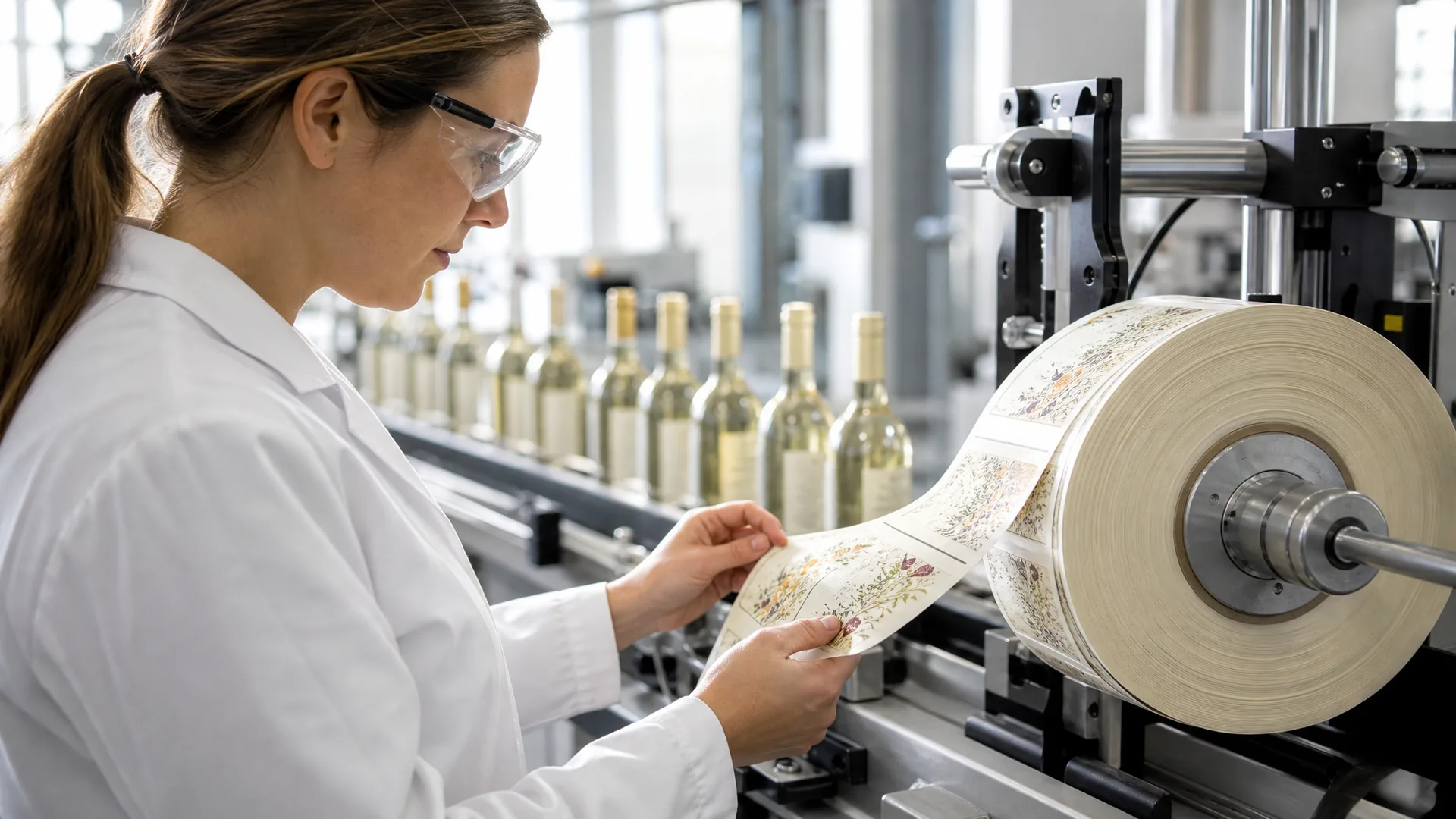
Choosing the right label for a bottle sounds straightforward, until you're dealing with moisture, cold chain, premium shelf positioning, and a compliance checklist all at once. For brand managers sourcing roll labels for bottles in South Africa, the material and finish decisions made at the specification stage determine whether your label performs in the field or fails on-shelf. This guide covers everything you need to make that call confidently: stock selection, adhesive types, finishes, print processes, and what to have ready before you approach a supplier.
Gateway Print & Packaging produces roll labels for established FMCG brands across cosmetics, nutraceuticals, and personal care, with production runs from 2,000 to 50,000 units. The recommendations in this guide draw directly from that experience.
Why Roll Labels Are the Practical Choice for Bottle Packaging
Roll labels are the default format for established brands running medium-to-high bottle volumes. They feed directly into automatic labelling machines, which apply labels at consistent speed without the variation that comes with manual application. That consistency matters when you're running thousands of units per shift.
From a cost perspective, roll labels become more efficient as volume grows. The format minimises material waste, reduces handling time, and keeps per-unit costs predictable. For brands running 2,000 to 50,000 units per production cycle, whether in beverages, cosmetics, or supplements, roll labels are almost always the right call.
They also give you flexibility. Custom printed product labels in South Africa can be produced in roll format across a wide range of substrates and finishes, so you're not sacrificing aesthetics for efficiency.
Choosing the Right Label Stock for Bottles
Matching your label substrate to the bottle material and fill environment is the single most important decision in the specification process. The wrong stock is the leading cause of label failure in the field, edge-lifting, adhesion failure, and print degradation are almost always traced back to a material mismatch, not a print quality issue.
Paper vs. Synthetic: What Holds Up on a Bottle?
Paper label stock works well in dry, ambient environments, boxed goods, dry food products, ambient retail. It's cost-effective and prints cleanly, but it has a fundamental weakness: moisture.
For bottles that will encounter water, condensation, refrigeration, or humid storage, synthetic films are the right choice. The two most common options are:
- BOPP (Biaxially Oriented Polypropylene): The workhorse of bottle labelling. BOPP film is waterproof, dimensionally stable, and bonds well to glass, PET, and HDPE surfaces. It handles refrigeration and wet environments reliably. A beverage brand switching from cut-and-stack paper labels to BOPP roll labels on PET bottles typically eliminates edge-lifting and moisture-related adhesion failures, a common problem in chilled distribution.
- PE (Polyethylene): More flexible than BOPP, making it suitable for squeezable containers where the label needs to conform to surface movement without cracking.
For vinyl labels for products, particularly in applications requiring durability under harsh conditions, vinyl film is worth comparing against BOPP depending on your specific use case.
Adhesive Types and Why They Matter for Bottle Surfaces
The adhesive is as important as the substrate. Two variables drive the adhesive decision: the bottle material and the application environment.
Permanent adhesive is the standard for most bottle applications, cosmetics, supplements, and beverages all typically require a label that stays put through the product's full shelf life and usage cycle.
Removable adhesive has limited bottle applications but is occasionally specified where the label must come off cleanly, promotional labels applied over a primary label, for example.
Substrate-specific considerations:
| Bottle Material | Key Adhesive Note |
|---|---|
| Glass | Requires strong initial tack; glass is non-porous and smooth, so adhesive formulation matters particularly for curved surfaces |
| PET | Good adhesion with standard permanent BOPP adhesives; low surface energy variants exist for challenging grades |
| HDPE | Lower surface energy than PET or glass, specify adhesives formulated for polyolefin surfaces to avoid failure |
If your bottles will go into an ice bath, a water bath, or a refrigerated display unit, ask your supplier about cold-application or deep-freeze adhesives. Standard permanent adhesives can fail below certain temperature thresholds.
Finishes That Make Cosmetic and Supplement Bottle Labels Stand Out
Once you've locked in the substrate and adhesive, the finish is where your label starts to do brand work. For cosmetic bottle labels and premium supplement label printing, finish selection directly affects how your product reads on-shelf.
Lamination, Varnish, and Foiling Options
Gloss lamination intensifies colour and adds a protective layer against scuffs and moisture. It's the most common finish for FMCG bottles and works well when colour vibrancy is a priority, bright cosmetic ranges, sports nutrition, and cold beverages all benefit from it.
Matte lamination gives labels a flat, sophisticated appearance. It photographs well and tends to read as premium. Paired with a white or neutral design, matte lamination positions a product distinctly from the gloss-heavy shelves it sits alongside.
Soft-touch lamination adds a tactile, velvety feel to the label surface. It's used almost exclusively at the premium end, luxury skincare, high-end personal care, where the physical feel of the product in hand is part of the brand experience.
Spot UV varnish applies a high-gloss coating to selected areas over a matte base. The contrast between flat and gloss draws the eye to specific design elements, a logo, a product name, a pattern. A matte laminate combined with spot UV on the brand name creates a tactile contrast that signals quality on-shelf, a finish approach widely used by mid-to-premium personal care brands in retail.
Hot-foil stamping adds metallic or holographic detail. Gold and silver foil are common in premium supplement label printing and luxury cosmetics. Foiling adds cost but delivers a visual quality that cannot be replicated digitally.
Print Processes for Roll Labels: Digital vs. Flexo
Choosing between digital and flexographic printing is fundamentally a question of run length and turnaround time.
Digital label printing is ideal for runs under roughly 5,000 to 10,000 units, though the economic crossover point varies by label size and complexity. The key advantages are:
- No plate costs, so shorter runs are economically viable
- Fast turnaround, days rather than weeks
- Variable data capability: batch codes, expiry dates, and sequential numbering can be printed on-press without separate coding equipment
For supplement brands that include variable data on-label, digital roll label printing is especially practical. It accommodates variable information without the cost overhead of separate coding machinery.
Flexographic printing becomes the more cost-effective choice at higher volumes. Once plates are made, the per-unit cost drops significantly and colour consistency across long runs is excellent. Flexo is the standard for established FMCG brands running tens of thousands of units per month with stable artwork.
In practice, many brands use both: digital for initial launches, product variations, or short-run promotional labels, and flexo for core SKUs once volumes are established.
Compliance and Practical Considerations for Bottle Label Printing in South Africa
Label compliance in South Africa is category-specific, and getting it wrong at the design stage is expensive.
Cosmetics fall under the South African Bureau of Standards (SABS) and must comply with labelling requirements set out by relevant industry regulations, including ingredient disclosure in the correct order and font, net content, country of origin, and responsible party details.
Nutraceuticals and supplements are regulated by SAHPRA (the South African Health Products Regulatory Authority) for scheduled products, or by DALRRD and the Department of Health for general health products. Label claims must be compliant, structure/function claims are permitted within defined limits, but medicinal claims are not.
Practical label sizing and placement:
- Label width must account for the bottle's circumference, leaving a small overlap or gap as the design requires, typically 3–5mm to avoid label buckling
- Barcode placement should be on a flat or near-flat panel, away from the base curve, and sized to meet GS1 South Africa minimum size requirements to ensure scanner readability at retail
- Regulatory text (ingredients, warnings, batch, expiry) must meet minimum font size requirements, typically no smaller than 6pt, though category-specific rules apply
Artwork should be supplied print-ready, ideally in vector format with fonts outlined, at the correct label dimensions, with bleed where required. If your artwork isn't print-ready, a packaging design service can prepare it to specification before production begins.
How to Brief a Roll Label Supplier in South Africa
A clear brief saves time and prevents costly revisions. When approaching a roll label supplier in South Africa, have the following ready:
Bottle details
- Material (glass, PET, HDPE, other)
- Diameter and height of the label panel
- Whether the bottle will be used in wet, refrigerated, or ambient conditions
Label specifications
- Label dimensions (width × height in mm)
- Number of labels per roll (if you're integrating with an existing labelling machine, confirm the core size and outer roll diameter)
- Front label only, or front and back?
Print and finish requirements
- Substrate preference (BOPP, paper, other)
- Finish (gloss, matte, soft-touch, spot UV, foil)
- Number of colours, and whether Pantone matching is required
Quantity and turnaround
- Total quantity for this order
- Likely reorder frequency
- Required delivery date
Artwork status
- Print-ready files available, or design still in progress?
- Has the design been checked for compliance (for cosmetics, supplements, or food)?
If your product also ships in secondary packaging, understanding folding carton packaging requirements at the same time as your label brief allows for a more integrated specification process.
Roll labels for bottles in South Africa aren't a commodity purchase, the specification decisions you make upfront determine performance in the field, compliance on-shelf, and how your brand reads at retail. If you're ready to discuss your label requirements with a team that works across cosmetics, supplements, and FMCG every day, contact Gateway Print & Packaging to submit your label brief or request an expert consultation. We'll help you specify correctly from the start.