How to Reduce Packaging Rejects and Downtime: Causes & Fixes
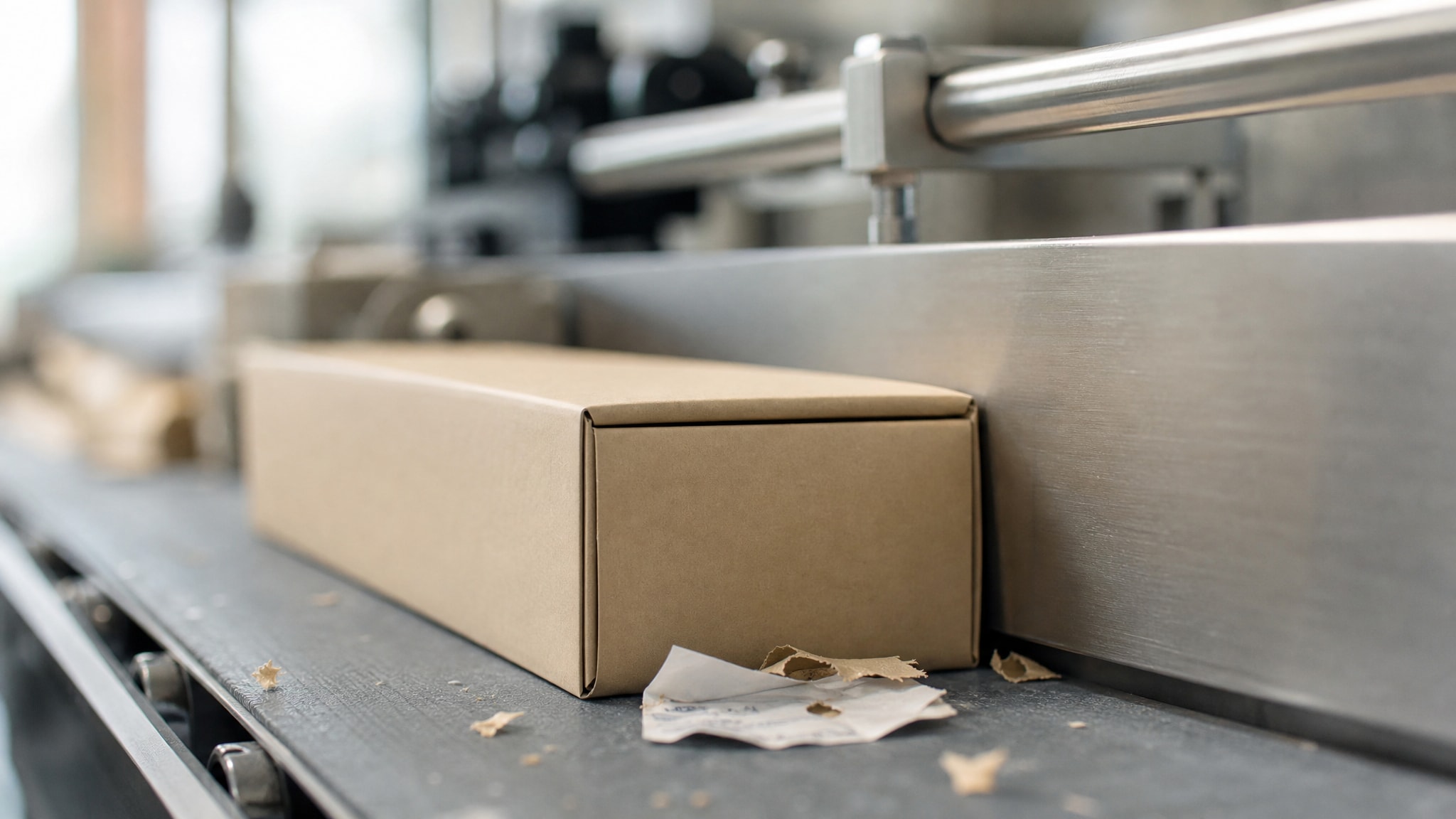
Packaging line stoppages rarely come from one catastrophic machine failure. They usually build from small specification gaps that pile up into wasted materials, idle labour, and missed dispatch deadlines. For established FMCG brands running batches between 2,000 and 50,000 units, reducing packaging rejects and downtime means looking past the production floor and into the technical brief itself. When labels flag or cartons jam repeatedly, the root cause is usually material selection or a structural tolerance defined weeks before printing began.
This guide looks at the specific technical mismatches that disrupt automated lines and how precise specification prevents them. It doesn't cover equipment maintenance or operator training; those are separate disciplines. The focus here is how packaging component specifications interact with high-speed automation to cause, or prevent, failures.
The True Cost of Packaging Line Downtime
Operational teams often treat rejects as an unavoidable cost of manufacturing. Most line interruptions actually trace back to decisions made during design and procurement, not mechanical wear or operator error. Seen this way, the financial impact goes well beyond discarded labels or crushed cartons. It includes idle labour, expedited freight for delayed orders, and retailers losing confidence in your supply reliability. A specification failure compounds quietly until it forces a full line halt, turning a minor tolerance issue into a commercial disruption that shows up in quarterly performance.
Diagnosing Label Application Problems on the Line
Label application problems cause a lot of unexpected downtime, because a label's physical properties have to match both the container geometry and the applicator's speed settings. Automated labellers work within narrow tension windows. Any deviation in material stiffness or adhesive behaviour creates an immediate feedback loop that stops the machine.
Adhesive and Material Mismatches
A common cause of label flagging on curved containers is specifying a rigid paper face stock instead of a conformable film like vinyl or PE. Paper doesn't hold adhesion during high-speed application the way film does. The adhesive itself might be perfectly adequate for a flat surface, but it can't overcome the memory of a stiff paper substrate trying to spring back to its original shape against a curved bottle. Face stock flexibility has to match the container radius, so the adhesive holds contact long enough to cure at line speed. Guidance on selecting the correct label material covers specific substrate recommendations for different container geometries and filling environments.
Liner Tension and Die-Cut Defects
Poor die-cutting or inaccurate liner slitting introduces variable tension that automated peel plates can't compensate for, so labels tear or dispense inconsistently. If matrix waste isn't stripped cleanly, or the liner has micro-nicks from blunt tooling, web tension fluctuates with every rotation of the unwind spindle. At several hundred labels per minute, these microscopic defects become macroscopic failures, forcing operators to keep adjusting tension brakes and eventually scrap entire rolls. Gateway Print & Packaging routinely catches die-cut and adhesive mismatches like this during pre-production reviews, for clients running batches anywhere from 2,000 to 50,000 units, before they cause a line stoppage.
Resolving Carton Fit Issues on Production Lines
Carton fit issues come from structural specification errors, not machine settings. Automatic erectors and closers rely on predictable board behaviour to form and seal boxes at speed. When crease depth or glue tab position falls outside the machine's tolerance window, no amount of mechanical adjustment fixes what is fundamentally a geometric mismatch.
Crease and Score Precision
Packaging engineers consistently find that over 70% of carton jams on automatic erectors trace back to crease depth or score position falling outside the machine's tolerance window, not mechanical failure. A score that's too shallow cracks the board unpredictably. One that's too deep weakens structural integrity and lets the carton collapse under forming pressure. Crease profiles need to be specified relative to board caliper and grain direction, to keep folding resistance consistent across the run.
Glue Tab and Closure Alignment
Misaligned glue tabs or inconsistent flap dimensions stop positive engagement with closing mechanisms, and the result is open cartons that trigger rejection sensors downstream. Even a half-millimetre variance in tab position can make the glue nozzle miss its target, or apply adhesive to a non-bonding surface, producing a leaky package that fails retail quality checks. Structural tolerances need to account for the cumulative effect of die-cutting variation, board swelling from humidity, and machine wear, to guarantee reliable closure at full line speed.
Print Quality Control Packaging Standards
Visual defects trigger rejections even when the package functions perfectly, because retailers and consumers equate print consistency with product safety and brand integrity. Print quality control packaging standards keep aesthetic variation within acceptable limits across multi-substrate or multi-batch production runs.
Colour Consistency Across Substrates
Colour variation exceeding Delta E 2.0 between print batches is a frequent trigger for quality holds in premium FMCG categories, even when every other functional spec is met. Different substrates absorb ink differently. A colour that matches on coated paper can drift significantly on uncoated board or synthetic label stock without adjusted press curves. Substrate-specific colour targets should be set during pre-press, rather than expecting a single Pantone reference to translate across every packaging component.
Barcode and Variable Data Verification
Unscannable barcodes or incorrect regulatory text are compliance failures, and they can halt distribution regardless of how good the rest of the artwork looks. Inline verification systems catch these errors during production, but they can't fix data that was wrong in the master file, or degraded by poor print contrast on dark substrates. Checking scannability against ISO grading standards before plate-making prevents costly retail chargebacks and protects your brand from regulatory scrutiny.
Preventing Errors Through Packaging Specification Accuracy
Accurate specifications reduce rejects before production even starts, by translating line requirements into measurable manufacturing parameters instead of subjective descriptions. This shifts quality assurance upstream, where corrections cost pennies instead of thousands of rands in wasted press time and materials.
Comprehensive Technical Briefs
A vague brief invites interpretation, and interpretation on a high-speed packaging line shows up as downtime.
Document the exact adhesive type, liner tensile strength, crease profiles, and colour tolerances. That removes ambiguity and gives the printer definitive acceptance criteria to validate every component against. Creating a comprehensive technical brief establishes this shared technical language before any tooling gets made.
Physical Mockups and Press Proofs
Digital proofs confirm artwork accuracy, but they can't simulate how a label conforms to a curved bottle, or how a carton behaves in an automatic erector. Physical validation exposes fit and finish issues that only show up when materials interact with actual machinery under real tension and speed. Investing in physical mockups and press proofs catches mechanical incompatibilities before full-scale production commits resources to a flawed specification.
Partnering with Experts to Minimise Packaging Rejects
Bringing in a packaging supplier early in the design phase surfaces line compatibility issues that internal teams can miss, simply because they're familiar with existing formats or assume materials are interchangeable when they aren't. Expert guidance on material and structural choices reduces risk far more than troubleshooting after problems have already disrupted a production schedule. Understanding common packaging mistakes helps frame the conversation around prevention rather than correction, so your next launch avoids the pitfalls that have derailed similar projects elsewhere.
Key Takeaways for Reducing Packaging Waste
Most packaging rejects come from preventable specification gaps, not unavoidable machine faults or operator negligence. Align design intent, material properties, and structural tolerances with your line's actual capabilities, and packaging stops being a recurring source of friction. When you're ready to validate your next project's specifications against real-world line requirements, requesting an accurate custom packaging quote starts that technical review before production begins.