Premium Packaging Supplier Vs Cheap Printer South Africa: Real Cost
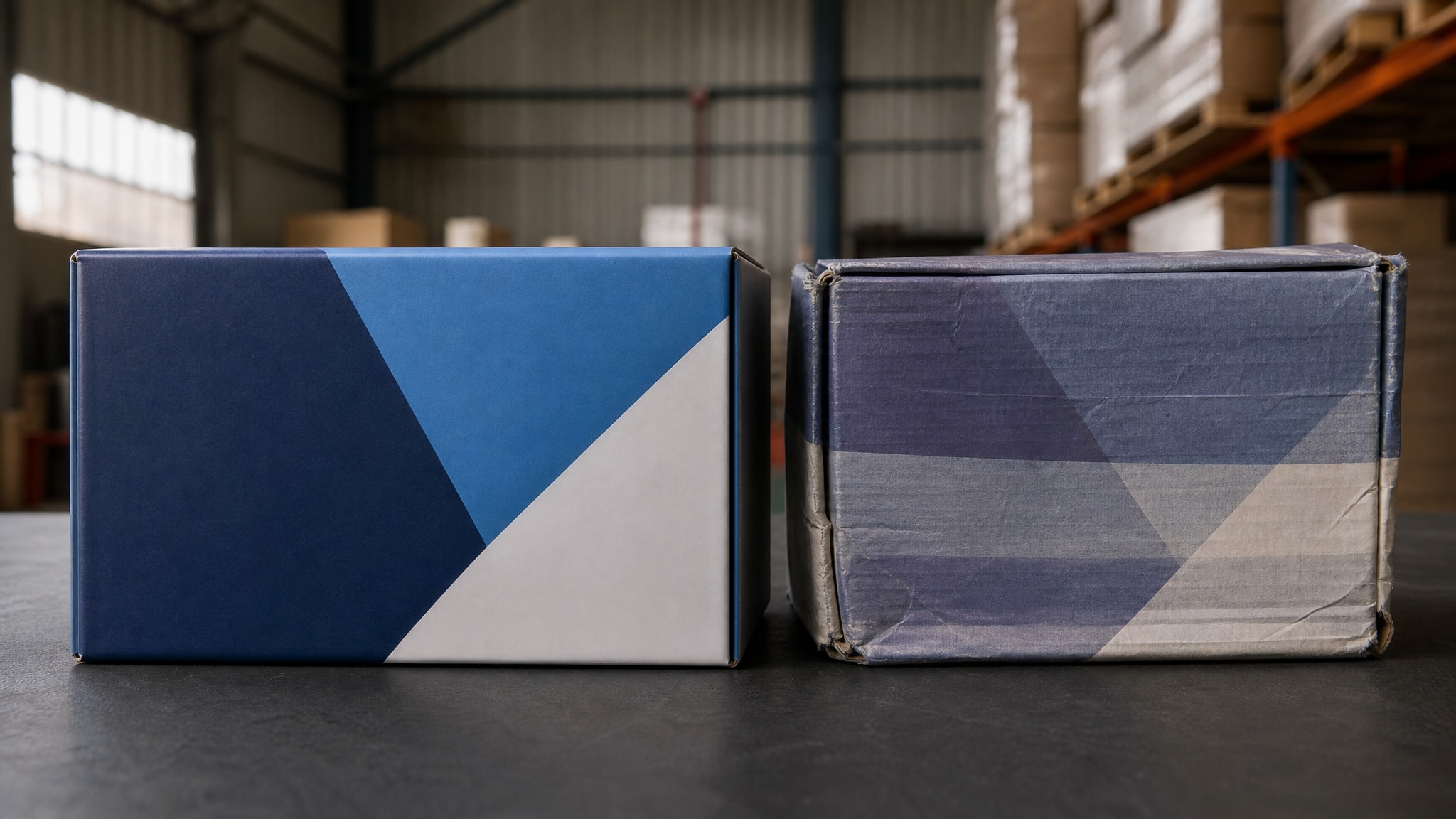
When your brand relies on consistent shelf presence, the lowest unit price on a packaging quote often signals the highest operational risk. Established FMCG brands and marketing agencies learn quickly that saving cents per label can cost thousands in production delays, compliance failures, and damaged retailer relationships. The distinction between a premium packaging supplier and a cheap printer in South Africa isn't about luxury finishes or prestige. It comes down to total cost of ownership and the reliability of your supply chain.
Choosing a partner for runs between 2,000 and 50,000 units means looking past the initial invoice to see how technical capability affects your bottom line. A budget provider may quote attractive rates for simple jobs, but often lacks the infrastructure to handle complex regulatory requirements or hold colour consistent across batches. This article looks at the real financial and reputational cost of that choice, so you can judge whether your current packaging strategy supports growth or just defers costs you'll pay later.
Defining Premium Packaging Suppliers Versus Budget Printers in South Africa
The real difference is whether a supplier treats packaging as a strategic part of your product or as a commodity print job. A transactional print shop focuses on keeping machines running with minimal intervention. That works fine for generic flyers but falls apart on regulated FMCG goods that need precise specifications. You need a partner who understands that your folding carton is a legal document and a brand asset, not just a container.
Premium means consistency, compliance, and reliable service, not expensive substrates or gold foil.
A dedicated packaging specialist builds pre-press workflows designed to catch errors before ink hits paper. Budget operators often rely on the client to spot mistakes after production has already started. That proactive approach is what separates a true packaging consultant from a generalist printer who accepts whatever file lands in their inbox without questioning bleed lines, colour profiles, or regulatory text. For established brands, this expertise prevents costly rework and keeps every delivery at the standard your retailers and customers expect.
Hidden Costs of Cheap Labels and Packaging Reprints
Low unit prices often hide downstream expenses that only show up once the packaging reaches your filling line or the retail shelf. Colour correction fees, wasted production time from misaligned die-cuts, and rejected stock from poor adhesive performance can easily outweigh whatever you saved by choosing the discount vendor. These hidden costs of cheap labels build up quietly in your operations budget, distorting your real product margins and creating cash flow problems you didn't plan for.
Operational friction from inconsistent supply usually does more damage than the direct cost of reprints. When packaging arrives late or out of spec, your whole production schedule stalls, forcing overtime payments and expedited freight to meet retailer delivery windows. Strategies for reducing packaging rejects and downtime have to start at procurement, because no amount of line-side troubleshooting fixes materials that were wrong from the start. The true price of packaging includes the hours your team spends managing a crisis instead of focusing on growth.
Adhesion failures are another cost that rarely shows up on a printer's quote. Labels that peel off in humid storage or won't sit flat on curved surfaces leave you with unsaleable inventory and, often, retailer penalties. Budget printers use generic adhesives to keep costs down and ignore the specific interaction between your container material and the storage environment. That small material saving turns into a major commercial loss the moment products come back from distribution centres.
Quality vs Price Packaging: Assessing Brand Reputation Risk
Packaging defects feed straight into consumer trust, especially in categories where shelf appeal signals product safety and efficacy. For cosmetics and nutraceuticals, a crooked label or faded colour suggests compromised quality control inside the bottle, whatever your actual manufacturing standards look like. The common packaging mistakes FMCG brands make usually trace back to choosing a supplier on price rather than technical competence.
Quality assurance works as insurance against brand damage, and it's cover a budget printer simply can't offer.
Retail buyers enforce strict compliance standards because poor packaging erodes trust in the whole category, not just one product. A single incident of illegible barcodes or missing allergen warnings can get you delisted from a major chain, costing far more in revenue than any printing saving. Your packaging supplier should be your first line of defence here, checking regulatory compliance and structural integrity before production begins. That protective role is missing from transactional printing relationships, where speed and volume come before accuracy.
Consumer perception forms within seconds of a product hitting a crowded shelf. Inconsistent colour matching between batches signals instability to shoppers who already know your brand, chipping away at loyalty built over years of marketing spend. Premium suppliers archive colour standards and substrate specifications so every run matches the last. Budget operators treat each job as a one-off. That systematic approach to quality protects your brand equity in ways a unit price comparison never will.
Why Premium Packaging Costs More: Technical and Service Standards
Higher rates reflect real investment in technology and process that stop errors before they happen. Rigorous pre-flight checking catches file issues, font substitutions, and colour space mismatches that would otherwise end up in your finished stock. Substrate testing confirms that your chosen material works with your specific ink system and finishing requirements, so you're not guessing at whether it'll crack on the fold line or fail to adhere properly.
Modern inkjet technology now competes closely with offset on cost per sheet, while delivering sharper detail and more consistent colour. That shifts the value proposition towards quality and turnaround speed rather than just volume pricing. UV printing adoption is accelerating among South African brands because it allows faster production of premium branded products with more flexibility than traditional methods, and it supports shorter runs without a drop in finish quality. These technologies need real capital investment and trained operators, which is exactly what budget facilities tend to skip.
Gateway's production workflow builds in rigorous pre-flight checks and substrate testing for FMCG clients running 2,000 to 50,000 units, holding the compliance and consistency that generalist printers typically can't match. Entry-level desktop sublimation printers in South Africa start around R5,500, while professional units exceed R180,000. That gap in equipment is a big part of why output consistency and durability vary so much between suppliers, and why two quotes for identical specifications can land miles apart in both price and expected outcome.
Colour management is another place where premium suppliers earn their rates. Spectrophotometric verification keeps Pantone matches within tolerance across different substrates and print runs, giving you objective data instead of a press operator's visual approval. Budget printers often rely on eyesight under variable lighting, and the inconsistency that creates only becomes obvious once batches sit side by side on a retail shelf.
Packaging Supplier Comparison South Africa: Evaluating Long-Term Value
Vetting a supplier takes more than reading the quote. Look at communication responsiveness, technical expertise, and whether they can scale production runs with you. A partner who understands regulatory requirements for industries like healthcare and food takes work off your plate, reducing your internal compliance burden and liability exposure. Reading up on getting an accurate custom packaging quote helps you spot suppliers who build in the necessary technical services rather than tacking them on later as extras.
You should also ask whether a supplier can grow with you as your SKU count rises and retail channels expand. Budget printers often hit capacity limits during peak seasons, leaving established brands competing with smaller jobs for machine time. A dedicated packaging partner holds capacity back for core clients and keeps redundant equipment on hand for demand surges. That reliability matters more as your business scales, because the cost of a stockout rises right alongside it.
How a supplier communicates tells you a lot about whether they're built for a long-term partnership. Responsive providers flag potential issues and bring solutions before problems escalate. Transactional printers wait for the complaint. Technical support during a production run means adjustments can happen fast, without scrapping an entire batch. None of this shows up on a price list, but it shapes your day-to-day operations more than the unit cost does.
Consistency Across Production Runs and Supply Chain Reliability
Keeping brand integrity on the shelf means colour and structural uniformity across batches produced weeks or months apart. Dedicated packaging specialists get there through standardised workflows, archived master samples, and calibrated equipment that takes the guesswork out. Generalist commercial printers can produce a fine single job, then struggle to match it once staff or equipment changes between runs.
For an established brand managing a complex supply chain, predictable output beats occasional excellence. Retailers expect the same presentation in every store and will penalise a supplier whose packaging varies noticeably between deliveries. Working with a local packaging printer for FMCG brands gives you geographic advantages, site visits and fast response, that a distant or purely digital supplier can't match. Physical proximity also makes it easier to solve problems together and build the kind of relationship that holds up under pressure.
Supply chain reliability goes beyond print quality. It also means accurate lead times and honest capacity planning. Premium suppliers give you realistic schedules based on actual workload and material availability, so you can plan production with confidence. Budget operators tend to overpromise to win the order, then deliver late once reality catches up. That forces you to carry higher safety stock, tying up working capital that could be funding growth elsewhere in the business.
Making the Switch: When to Move From Discount Printing to Expert Partnership
Rising SKU complexity, retail expansion, or recurring quality issues all signal that your current supplier can't keep up with where your business is headed. Brands moving from startup to established market presence often find that the same vendors who served them well early on become a liability once the stakes rise. Guidance on switching packaging suppliers without delays can help make sure that transition strengthens your operation rather than disrupting it.
This upgrade is a strategic growth step, not just a change of vendor. An expert partner brings technical knowledge that improves packaging performance and reduces total cost, even at a higher unit price. Working through design together surfaces ways to improve manufacturability, sustainability, and shelf impact all at once. Budget printers execute instructions. Premium partners improve them.
The decision comes down to whether your packaging problems are about execution or strategy. If price is genuinely your only pain point, it may be worth negotiating with your existing supplier first. But if you're dealing with recurring quality issues, compliance concerns, or capacity limits that are holding back growth, the fix needs capabilities a discount provider structurally can't offer.