
Packaging Redesign for Existing Products in South Africa
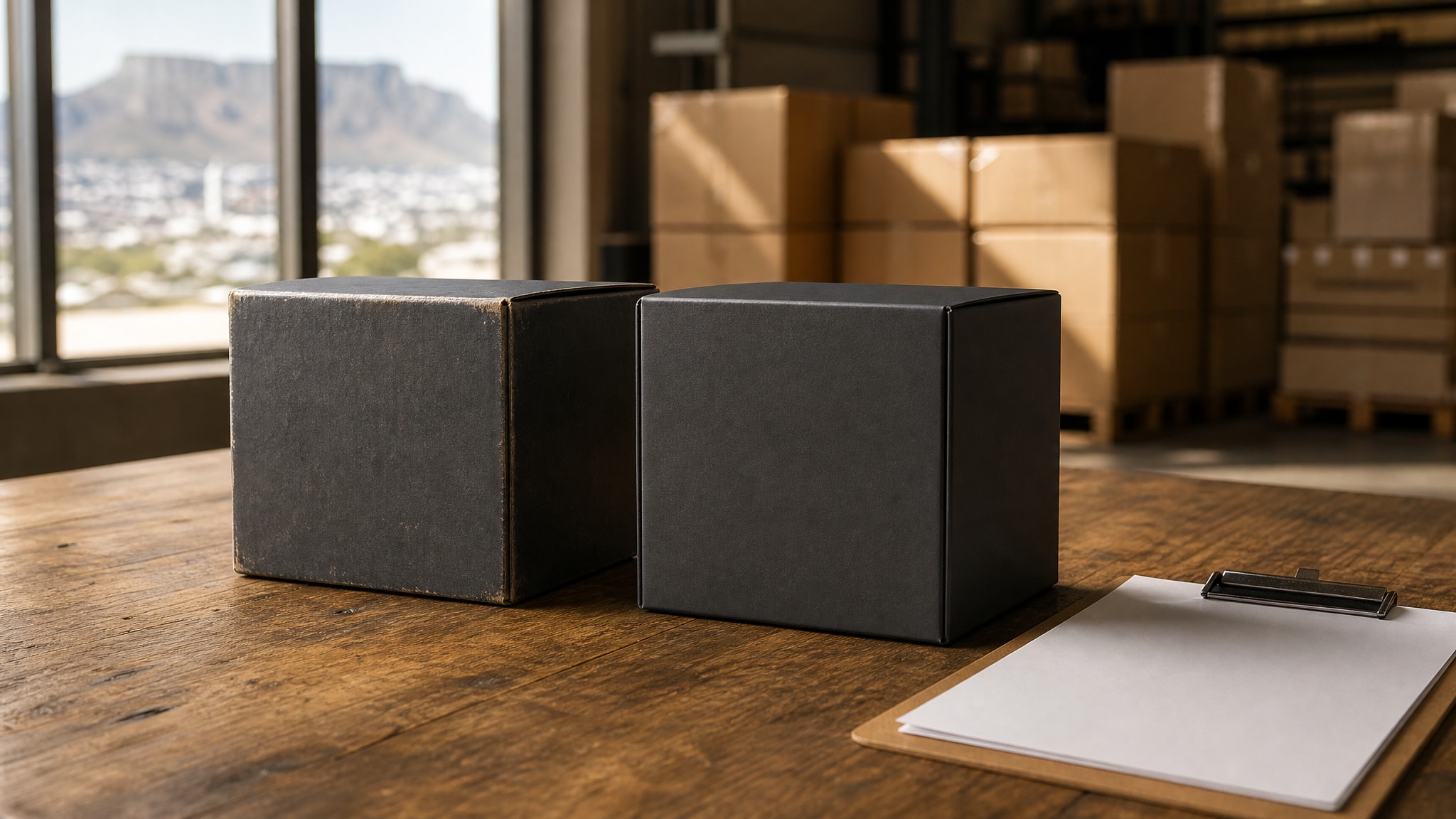
Redesigning packaging for an established product carries risks that launching a new SKU doesn't. You're working with existing customer expectations, active retail listings, and inventory that can't simply vanish overnight.
In South Africa, that means balancing commercial ambition with operational continuity, so the redesign doesn't disrupt your supply chain.
This guide addresses the specific challenges of refreshing established SKUs rather than launching new ones: the triggers, retailer notification, and production continuity for brands printing between 2,000 and 50,000 units.
When to Redesign Packaging for Established SKUs
Deciding when to redesign packaging often comes down to operational friction or regulatory pressure, not a simple desire for visual novelty. Declining shelf velocity, retailer feedback about poor scan rates, or mandatory updates to South African labelling standards are usually what triggers a refresh. A tactical update fixes these functional problems while keeping the brand equity you've built over years of trading. A full rebrand resets market positioning instead, and carries a much higher risk of alienating loyal customers.
You need to distinguish clearly between solving a problem and chasing a trend.
Regulatory compliance is a non-negotiable driver for many local manufacturers, particularly as new labelling standards come into effect across food, health, and veterinary sectors. Updating artwork to meet these requirements gives you a natural window to improve other functional aspects of the pack without triggering a full identity overhaul. Retailer scorecards also offer useful data. If your product keeps losing points for damaged barcodes or illegible batch coding, the packaging itself is likely the cause, not warehouse handling alone.
Managing Stock and Production Continuity During Transition
Phasing out old packaging without creating dead stock or supply gaps means aligning print run sizes with how fast your current inventory is depleting. Brands that get this wrong end up warehousing obsolete materials, or worse, running into stockouts that damage retailer relationships and consumer trust. Production runs for established SKU refreshes generally range from 2,000 to 50,000 units, balancing cost-efficiency with the flexibility to test market response before committing to larger volumes.
Your procurement team should calculate the exact burn rate of existing packaging before placing any new orders.
Running changes, where old and new packaging coexist briefly in the supply chain, need clear version control and warehouse protocols to prevent picking errors. Time the new print delivery to land around the projected exhaustion date of old stock. That minimises storage costs and cuts the waste of scrapping unused materials, which is what prevents the financial leakage that often accompanies poorly managed transitions in high-turnover FMCG categories.
Securing Retailer Buy-In for Shelf Updates
South African retail buyers judge packaging updates on category growth and operational efficiency, not aesthetic preference. Before approving an update for listed SKUs, retailers typically want updated planogram dimensions, confirmed barcode verification certificates, and evidence that the change improves shelf performance or cuts in-store handling errors. Present your redesign as a solution to a shared category problem, such as better stackability or faster checkout scanning, and you'll secure buy-in far more effectively than if you lead with creative rationale.
Buyers care about packaging that makes their operations smoother and more profitable.
Compliance documentation needs to go in well ahead of the intended shelf date, to allow time for buyer review and system updates. Delays in providing accurate case counts, pallet configurations, or allergen declarations can push back launch dates by weeks, regardless of how ready the physical product is. Engaging buyers early shows respect for their planning cycles and positions your brand as a reliable partner rather than a source of administrative friction.
Refreshing Product Labels Without Losing Brand Recognition
Successful packaging refreshes typically retain around 70% of the original visual cues, which keeps shopper recognition intact while functional elements like barcodes or ingredient lists get updated. Strip away too much familiarity during a label refresh and you break the mental shortcut loyal customers use to find your product on a crowded shelf. Understanding packaging psychology and label design helps you identify which specific assets drive repeat purchases, so you know what must stay untouched during the modernisation process.
A refresh differs from a rebrand because it evolves recognition rather than resetting it.
Technical considerations matter most when you're changing container shapes or sizes alongside the visual update. Choosing between shrink sleeve labels vs roll labels depends heavily on whether the new vessel needs 360-degree coverage, or whether a simpler front-and-back application will do for the updated format. Switching from paper labels to vinyl or polypropylene often resolves scuffing in humid South African retail environments, and it doesn't require a complete structural redesign.
Choosing Materials and Finishes for Premium Shelf Impact
Selecting substrates and embellishments that signal quality within mid-tier production runs means factoring in local logistics conditions alongside visual goals. South African humidity and long distribution routes demand materials that hold their premium appearance from the printing press to the final point of sale. Degradation on shelf undermines the perceived value of the product itself. Guidance on choosing a label finish for shelf standout can help you pick tactile enhancements, like spot varnish or textured stocks, that survive the supply chain intact.
Material choices should match the price point and positioning of the SKU, or you risk creating cognitive dissonance for the shopper. A matte finish might suit a nutraceutical but suggest dirtiness on a household cleaner, which is why substrate selection needs to follow strategic intent rather than trend reports. Durability testing under local conditions prevents the embarrassment of premium finishes peeling or fading before the product reaches the consumer's basket.
Measuring the Success of Your Packaging Refresh Strategy
Metrics beyond sales volume give you earlier, more specific signals about whether the redesign solved the original trigger. Reduced return rates due to damage, faster pick-and-pack speeds at distribution centres, and fewer retailer deductions for compliance failures all point to the functional objectives being met. Post-launch retailer scorecards and consumer sentiment tracking tell you whether the redesign actually moved the needle on the issues that prompted the investment.
Sales lift alone can't tell you if the packaging did its job.
Establish baseline measurements before the redesign launches, so you have something real to compare against rather than guesswork. If the goal was reducing scuffing, quantify the damage rate before and after the change. If the aim was faster checkout throughput, measure scan success rates with both old and new barcodes. These concrete data points justify the spend to stakeholders and inform future iterations with evidence rather than intuition.
Partnering with a Supplier for Seamless Redesign Execution
A packaging partner managing complex transitions needs to show real capability in artwork adaptation, colour matching across different substrates, and lead time management during handover periods. Gateway provides pre-production mockups and artwork support to check colour consistency and structural integrity before you commit to full print runs, catching errors when they cost hundreds of rand rather than tens of thousands. That makes it a lot easier to reduce packaging rejects and downtime when your supplier is identifying risks before production starts, not after.
Expert suppliers catch expensive mistakes before plates are made.
If your redesign coincides with a supplier change, for better quality or faster turnaround, it's worth understanding how to manage switching packaging suppliers without delays. Colour profiles, die-lines, and finishing specifications don't always transfer cleanly between printers, which makes pre-production validation essential for established SKUs where consistency matters most. A partner who understands what's at stake in live production runs will prioritise verification over speed during the initial transition, so the first delivery matches the approved standard exactly.
Frequently Asked Questions
How far in advance should I notify retailers about a packaging redesign?
Most major South African retailers require at least eight to twelve weeks' notice before a packaging change hits shelves to update their systems and planograms. Submitting updated barcodes, case dimensions, and compliance documentation within this window prevents delisting or receiving penalties for unauthorised changes. Earlier engagement is advisable if the redesign alters outer case configuration or pallet patterns.
Can I run old and new packaging simultaneously without confusing customers?
Yes, running changes are common practice provided you implement strict version control and communicate clearly with warehouse and retail partners. Ensure both versions share identical barcodes and core visual identifiers so shoppers recognise them as the same product. Clear internal protocols prevent mixed cases reaching store shelves, which creates confusion and potential compliance issues.
What is the typical cost difference between a label refresh and a full rebrand?
A tactical label refresh typically costs significantly less than a full rebrand because it retains existing structural tooling and focuses only on artwork and material updates. Full rebrands often require new dies, moulds, and extensive consumer research, multiplying both direct costs and indirect risks. Budget allocation should reflect whether you are solving a functional issue or repositioning the entire brand.
How do I know if my current packaging is causing declining sales?
Analyse retailer scorecards for deductions related to damage, scanning failures, or shelf readiness alongside sales data to isolate packaging as a variable. Consumer research and shelf audits can reveal whether visibility issues or degraded appearance at point of sale correlate with velocity drops. Ruling out pricing, distribution, and competitive activity first prevents misattributing commercial decline to packaging alone.