Packaging Printer for FMCG Brands: Choosing a Local Partner
Searching for a packaging printer near me for FMCG brands often turns up general commercial print shops that lack the infrastructure fast-moving consumer goods actually need. Geographic proximity is convenient, but it does not guarantee the technical capability required to keep brand integrity consistent across a complex product range. Established businesses need a supplier who understands regulatory compliance, colour consistency and scalable production runs, not just physical closeness.
For established FMCG brands, the true value of a local supplier lies in their ability to manage complex SKU ranges and ensure regulatory compliance, not merely their geographic convenience. Prioritising technical fit over mileage prevents costly retail rejections and keeps your packaging performing as intended on the shelf.
Why Proximity Alone Is Not Enough for FMCG Packaging
A search for a local FMCG packaging supplier in South Africa typically ranks results by distance rather than industrial specialisation. That distinction matters, because general printers work to different tolerances and run different equipment than a supplier dedicated to product packaging.
The Limitations of Generic Local Print Shops
General commercial printers are good at paper products like brochures and business cards. They often lack the finishing equipment labels and cartons need. Their presses may not handle synthetic substrates or food-safe inks, which creates compliance risk for cosmetics, nutraceuticals or household products.
You might save travel time by choosing the nearest vendor, then lose it again when they outsource complex finishing work or struggle with material compatibility. A jobbing shop built for short-run paper printing cannot replicate the precision an automated packaging line or a high-speed retail environment demands.
Defining True Local Value in South Africa
True local value comes from supply chain reliability and technical alignment, not simple geography. A specialist custom packaging printer in South Africa understands the market's specific challenges: humidity resistance for coastal distribution, durability for long-haul transport. That expertise cuts waste and prevents stockouts more effectively than a nearby vendor who treats packaging as a side line.
When you evaluate a potential partner, ask whether their idea of "local" includes any real understanding of your sector's operational realities.
Critical Capabilities for an FMCG Packaging Supplier
Production capability determines whether a supplier can deliver premium quality consistently, at the volumes your brand needs. Without the right machinery and processes, even the most convenient location counts for nothing.
Specialised Equipment for Labels and Cartons
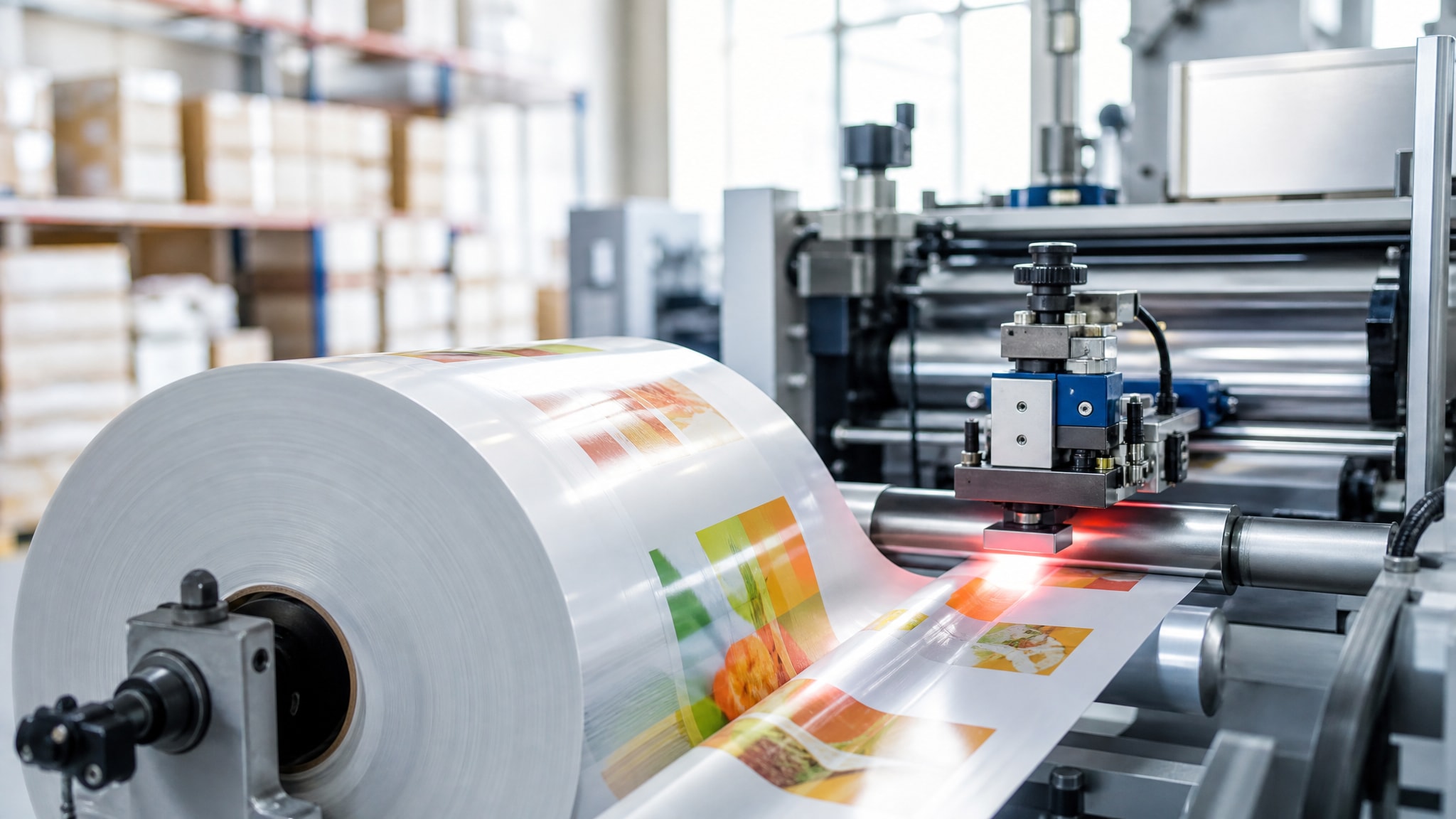
High-quality roll labels and folding cartons need presses built for continuous production and precise registration. Digital prototyping machines have their place during development, but established brands need offset or flexographic capability to hit cost-efficiency and finish quality at scale.
Your packaging has to survive filling lines, cold chains and shelf handling without delaminating or scuffing. That takes substrate-specific engineering most generalists simply don't have. Investing in proper tooling upfront prevents the recurring quality issues that eat into margin over successive production runs.
Colour Consistency Across Multiple SKUs
Packaging inconsistencies across multiple SKUs remain a primary cause of retail rejection and brand dilution in the South African FMCG sector. Matching colours exactly across different materials and print runs takes proper colour management systems and regular calibration, well beyond a standard CMYK conversion.
You need a partner who treats your brand colours as fixed standards, not variable outputs, so a shampoo bottle printed in January matches one printed in June. That level of control protects brand equity and stops retailers discounting mismatched stock.
Regulatory Compliance and Barcode Accuracy
FMCG packaging carries legal obligations around ingredient listing, allergen warnings and barcode verification that a general printer may overlook. A specialist builds pre-flight checking into the workflow, catching errors before plates are made and cutting the risk of non-compliant stock reaching the market.
Barcode readability affects checkout speed and inventory accuracy directly, which makes verification testing a non-negotiable step in production. Use a vendor without these protocols and you're exposed to recalls and retailer penalties that dwarf any saving on unit cost.
Aligning Minimum Order Quantities with Brand Growth
Volume flexibility lets mid-sized brands balance cash flow against unit economics without committing to excess inventory. Finding a partner whose production model matches your growth stage matters for sustainable scaling.
The Risks of Mismatched Production Runs
Suppliers geared towards massive national contracts often set minimums that strain working capital for a growing brand. Digital-only shops, meanwhile, charge premiums that eat margin once volumes rise. Commit to 100,000 units when you only need 15,000 and you tie up cash and storage space; order 500 units repeatedly and setup costs inflate your landed price each time.
Understanding minimum order quantities helps you find suppliers whose sweet spot matches your actual demand, rather than forcing you into an inefficient purchasing cycle. Get this wrong and you face either financial pressure or margin erosion, and either one hurts your competitive position.
Finding the Sweet Spot Between 2,000 and 50,000 Units
A specialist packaging partner typically supports production runs between 2,000 and 50,000 units, bridging the gap between digital prototyping and high-volume national contracts. That range covers new product launches, seasonal variations and restocking cycles for established SKUs, without demanding warehouse-scale commitments.
You get the economies of scale digital printing can't offer, while keeping the agility to adjust volumes as the market shifts. Gateway provides dedicated account management and technical artwork vetting to catch print errors before production starts, which keeps quality consistent for premium brands operating in this volume band.
Account Management: The Difference Between a Vendor and a Partner
Technical expertise matters as much as printing capacity when you're managing a complex packaging project. The human element of account management is what turns a transactional purchase into a strategic advantage.
Proactive Communication vs Reactive Order Taking
Reliable turnaround depends on collaborative planning and spotting bottlenecks early, not just press speed. A dedicated account manager tracks lead times, flags material shortages and books production slots ahead of your urgent orders, rather than waiting for you to chase them.
Reactive vendors wait for instructions, then report the delay. Proactive partners build themselves into your planning cycle to keep launches on track. That relationship cuts the admin load on your team and gives you confidence your packaging will arrive when promised.
Technical Guidance During Artwork Briefing
Preventing costly print errors starts with getting the specification right at the briefing stage, not fixing it after delivery. An experienced account manager checks artwork files for trap settings, bleed allowances and substrate compatibility before production begins, catching the issues a designer unfamiliar with print often misses.
Briefing your packaging printer correctly makes sure creative intent translates accurately to the physical product, and avoids expensive reprints and launch delays. That technical vetting adds value an automated quoting system simply can't provide.
Evaluating Custom Packaging Printers in South Africa
Selecting the right supplier takes systematic evaluation, beyond website claims and proximity searches. A structured assessment shows whether a printer genuinely fits your operational needs.
Assessing Portfolio Relevance to Your Sector
Industry experience signals familiarity with the regulatory requirements, material standards and retail expectations a generic portfolio won't show. Request case studies or samples from your exact category, whether that's cosmetics, veterinary or industrial products, to verify real capability rather than assume transferable skill.
Avoiding common FMCG packaging mistakes often comes down to a supplier's knowledge from previous work in your niche, not general printing competence. A portfolio heavy on corporate stationery and light on product labels signals a mismatch for FMCG work.
Verifying Quality Control Processes
Ask specific questions about colour management workflows, substrate testing and barcode verification protocols. That separates marketing claims from operational reality. Request physical samples made on the same equipment and materials you intend to use, since a screen proof can't show texture, adhesion or finish quality.
Factors influencing custom label printing costs include these quality assurance measures, so understanding what you're paying for helps justify a specialist over a cheaper alternative. A supplier confident in their process welcomes detailed technical questions; one who deflects them is a warning sign.
Transitioning to a Specialist Packaging Partner
Switching suppliers takes careful planning to avoid disrupting your production schedule. A methodical transition keeps the risk down while building the foundation for a better outcome.
Start by requesting mockups or trial runs on your actual specifications, to validate quality before you commit to full production volumes. Running in parallel with your existing supplier for the first few orders gives you cover while the new relationship settles and any teething issues get resolved.
Scaling packaging for range expansion gets simpler once you've confirmed your new partner can handle both current volumes and future growth without compromising standards. This phased approach protects your supply chain while you capture the benefits of specialist expertise.
Investing time in selecting a capable specialist pays off over the long term far more than defaulting to the nearest general printer purely on location. The effort of vetting and transitioning shows up later as less waste, fewer emergencies and stronger shelf presence.
Securing Reliable Packaging for Your Product Range
Your packaging supplier decision should weigh technical capability, volume alignment and expert support ahead of simple geographic convenience. Procurement teams who judge partners against these criteria end up with a more reliable supply chain and stronger shelf presentation than those who choose on proximity alone.
Contact Gateway Print & Packaging to discuss your production requirements and see how specialist FMCG packaging expertise supports your brand's growth.