Label Finishes: Gloss, Matte & Soft Touch Compared
Most brand managers don't choose a label finish. It gets chosen for them, by default, because nobody flags it as a decision worth making. The print quote comes back, gloss is listed as standard, and the job goes to press. Yet finish is one of the few packaging choices that shapes shelf stand-out, perceived quality, and unit cost all at once. That makes it a branding decision, not a footnote on a spec sheet.
This gap shows up constantly in South African packaging conversations. There's plenty of information on label materials and printing methods, but very little that walks a non-printer through gloss vs matte labels, soft touch options, and where spot UV fits, in plain language. This guide fills that gap.
Why Label Finish Is a Branding Decision, Not an Afterthought
A label finish does three jobs at once. It affects how colour reads under shop lighting, how the product feels in a customer's hand, and how long the label survives handling, moisture, or fridge storage. Get it wrong and a premium product can look budget, or a budget product can carry costs it doesn't need.
Gateway works with FMCG brands across cosmetics, nutraceuticals, and personal care running print jobs from around 2,000 to 50,000 units, and finish choice is one of the most common briefing questions brand managers raise. It usually comes up late, once samples are already being compared against a competitor's shelf presence.
The guesswork brand managers face
Without a printing background, most brand managers are choosing between finish names they've seen used loosely: gloss, matte, soft touch, spot UV. Marketing agencies often recommend a "premium look" without specifying which finish achieves it, or at what cost. The result is guesswork at exactly the point where a wrong call is expensive to reverse. Labels are usually ordered in bulk, and reprinting a run to fix a finish decision wastes both budget and lead time.
Gloss vs Matte Labels: Core Differences
Gloss and matte are the two standard finishes most printers will quote by default, and they behave very differently on shelf.
Gloss varnish or laminate sits on top of the print and reflects light. It makes colours look bright and saturated, gives strong contrast, and reads well from a distance across a crowded shelf. It's also generally the more cost-effective option, which is why high-gloss labels are the default for many household and personal care bottles. They maximise colour vibrancy under retail lighting without adding cost to the run.
Matte finish absorbs light rather than reflecting it. Colours look more muted and sophisticated, and the surface resists fingerprints and glare. It's the finish most often associated with a premium, understated feel, though it typically costs a little more than uncoated or basic gloss options.
When gloss works best
Gloss suits products that need to compete on visual impact rather than tactile quality:
- Household cleaning products and detergents, where bold colour cuts through shelf clutter.
- Budget-conscious personal care ranges, where cost per unit matters more than a premium feel.
- Products viewed mostly from a distance, such as those on high, busy retail shelving.
When matte works best
Matte earns its higher price tag where perceived quality matters more than shelf shout:
- Premium skincare and cosmetics, where an understated finish signals sophistication.
- Nutraceuticals and supplements aiming for a clinical, trustworthy look rather than a loud one.
- Any product handled directly by the customer before purchase, since matte resists visible fingerprints far better than gloss.
Soft Touch Label Finish: The Premium Tactile Option
Soft touch, sometimes called tactile or velvet laminate, is a step beyond matte. It's a lamination applied over the printed label that creates a soft, velvety surface, the kind that makes a customer pause and touch the packaging before they've even read it.
What soft touch feels and looks like
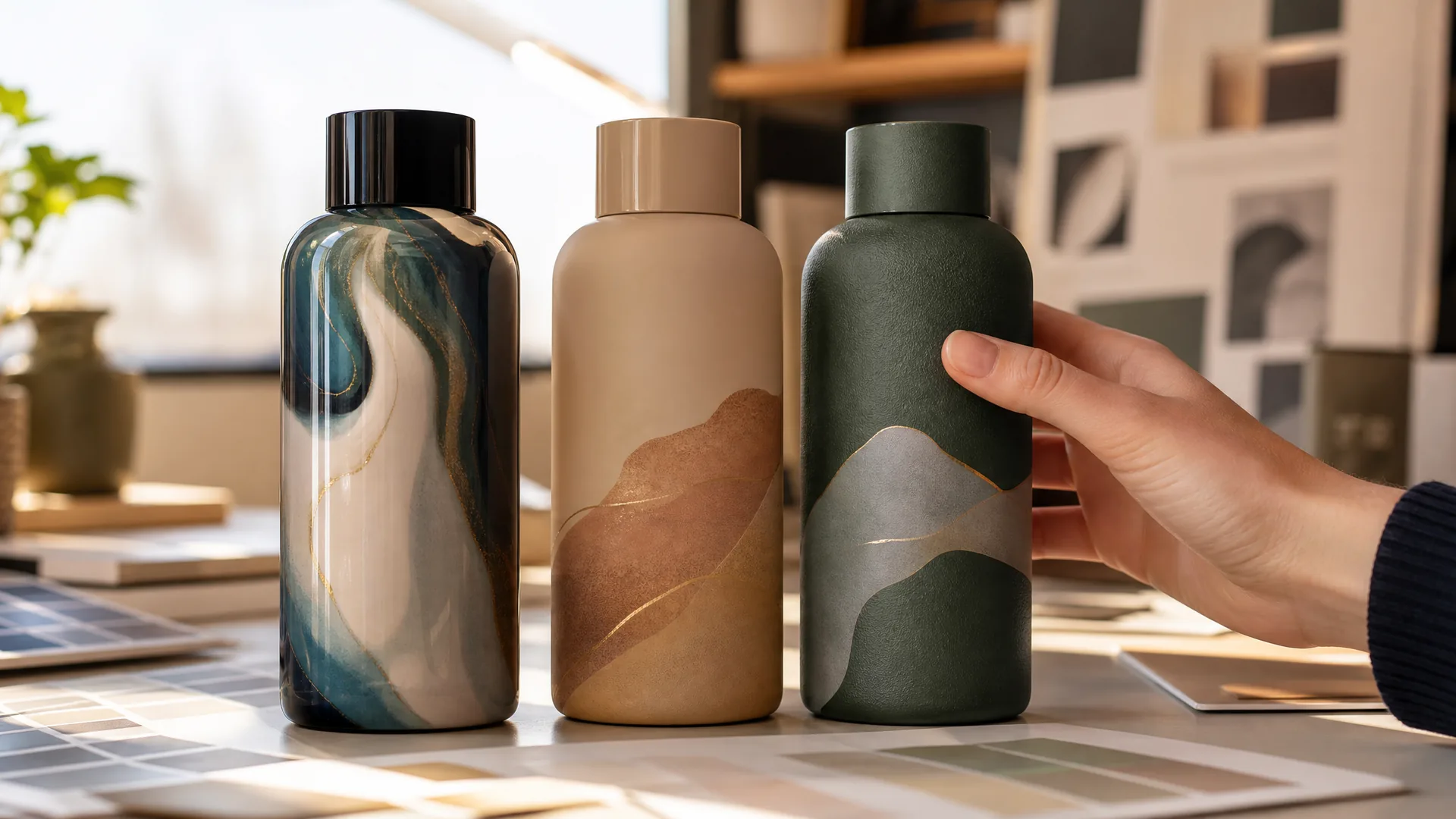
Visually, soft touch looks similar to a matte finish: muted, non-reflective, understated. The difference is entirely in how it feels. Where matte varnish is smooth, soft touch laminate has a slight texture and a warmth to it, closer to suede than paper. It's a deliberately sensory finish, meant to be noticed by hand as much as by eye.
Where the extra cost is justified
Soft touch (tactile) laminates typically cost more per square metre than standard gloss or matte varnish, and that needs to be factored into per-unit label costs, particularly at higher volumes. The extra cost tends to be justified where the tactile experience directly reinforces the brand:
- Premium cosmetics and fragrance, where unboxing and shelf handling are part of the customer experience.
- Gifting and limited-edition ranges, where the label itself is part of the perceived value.
- Positioning against higher-priced competitors, where a tactile finish helps justify a price point.
For everyday household or high-volume budget products, soft touch rarely earns back its cost. It's a finish for ranges where touch and feel genuinely sell the product.
Label Lamination and Varnish Options Beyond the Basics
Gloss, matte, and soft touch aren't the only label lamination options available. For brands wanting a shelf edge without a full premium relaunch, a few combination finishes are worth knowing.
Spot UV labels for contrast and shelf impact
Spot UV applies a high-gloss varnish to specific areas of a label, typically a logo, icon, or key piece of text, while leaving the rest of the label matte or uncoated. The contrast between the flat background and the glossy highlight draws the eye and adds a sense of craft, without the cost of laminating the entire label surface.
A matte finish with spot UV highlights on a logo is a common approach for premium skincare ranges wanting a tactile, understated shelf presence with one clear point of contrast. It's a way to say "premium" without committing to a full soft touch lamination across every label in the run.
Textured varnish is a related option, adding a raised or embossed feel to specific design elements rather than a flat coating. Combination finishes like matte plus spot UV, or gloss plus spot UV, sit between the standard finishes and full soft touch on both cost and impact. They're a useful middle ground for brands testing a premium repositioning before committing budget to a full relaunch.
Cost, Durability and Ideal Use Cases Compared
Choosing a finish is a packaging decision, not just a print effect. It affects perceived value, how the label holds up in transit and on shelf, and how it performs with the adhesives and inks needed for cosmetics, pharma, or food-contact products. Here's how the main options compare in practice.
Gloss, Lower cost tier. Good general durability, though prone to showing scratches and fingerprints over time. Best suited to household products, personal care, and any range prioritising shelf visibility over feel.
Matte, Mid cost tier. Better fingerprint and scuff resistance than gloss, holds up well to regular handling. Suited to cosmetics, nutraceuticals, and premium personal care.
Soft touch, Higher cost tier. Excellent resistance to visible fingerprints, but the tactile laminate can be more sensitive to scuffing in rough transit conditions if not paired with the right protective overlay. Best for cosmetics, fragrance, and gifting where the label is handled deliberately rather than roughly.
Spot UV / combination finishes, Mid-to-higher cost tier depending on coverage. Durability sits close to the base finish (matte or gloss) with added visual contrast. Suited to any category wanting a premium accent without a full relaunch.
Durability by environment (fridge, bathroom, transit)
Environment matters as much as finish when it comes to durability. Labels in bathroom or fridge conditions face constant moisture and condensation, which can lift a poorly matched adhesive or cause laminate edges to peel over time. For these applications, the finish decision needs to work alongside the right label material. This is where vinyl labels for durable products often come into play, since vinyl substrates handle moisture and temperature swings better than standard paper stocks regardless of the finish applied on top.
Transit durability is a separate concern. Labels that get handled repeatedly during distribution, on pallets, in cartons, during retail restocking, benefit from a tougher laminate rather than a purely decorative one. It's worth flagging to your printer regardless of which finish you choose on appearance grounds.
Matching finish to product category
As a starting point:
- Household and cleaning products, gloss, for cost efficiency and shelf visibility.
- Personal care (shampoo, body wash), gloss or matte, depending on price positioning.
- Cosmetics and skincare, matte or soft touch, with spot UV accents common on logos.
- Nutraceuticals and supplements, matte, for a clinical, trustworthy look; this pairs with the wider set of nutraceutical label requirements around compliance content that also need to fit on the same label.
- Fragrance and gifting, soft touch, where the label is part of the unboxing experience.
Choosing the Right Finish for Your Next Print Run
There's no single "correct" finish. The right choice depends on how your product is bought, handled, and stored, and on where it needs to compete on shelf.
A few questions help narrow it down. Is the product judged mostly from a distance, or picked up and handled before purchase? Does it sit in a fridge, bathroom, or humid environment? Is the brand positioned against premium competitors, or on value and accessibility? The answers usually point clearly toward gloss, matte, soft touch, or a spot UV combination.
Finish decisions also follow on from material choice, so it's worth choosing the right substrate before finish is locked in. The wrong base material can undercut even the best-chosen laminate. Once you've settled on a direction, briefing your printer on finish specifications properly avoids costly surprises at proofing stage. And for cosmetics brands weighing a premium finish for the first time, it's worth vetting a cosmetic packaging supplier that can actually execute soft touch and spot UV consistently at volume, not just quote for it.
For a broader view of how labels fit into the rest of your packaging, the custom printed product labels overview covers materials, formats, and print methods beyond finish alone. And if you're planning ahead, packaging trends shaping finish choices in 2026 is worth a look before you commit to a long print run.
The most reliable way to decide is to compare finishes against your own product, under your own shop lighting, in your own hands, not on a screen. Gateway can put together a sample pack showing gloss, matte, soft touch, and spot UV side by side on your actual label design, so you're choosing based on how it looks and feels, not on guesswork. Get in touch to request samples or a short consultation before your next print run goes to press.