Food Packaging Printer South Africa: What to Look For
Sourcing a reliable food packaging printer in South Africa takes more than comparing print quality and price lists. For established FMCG brands, the real concern is regulatory safety and supply chain reliability, not the lowest unit cost. Your packaging has to protect consumers first and promote the product second. That means checking that every ink, substrate and adhesive meets food contact standards before production starts.
This distinction separates general commercial printers from specialist packaging partners who understand the risks tied to consumable goods. Gateway specialises in custom printed packaging and labels for established brands that need premium quality and expert compliance advice, so your products meet market expectations and legal obligations without delays or technical failures.
Understanding Food Packaging Compliance Standards in South Africa
Food packaging compliance in South Africa usually means meeting local regulations and, often, international export standards at the same time. Reputable printers must supply migration test certificates proving their inks and varnishes comply with EU 10/2011 or an equivalent standard for food contact materials. That documentation is your main defence against liability and retailer rejection. A supplier's general ISO certification doesn't cover food safety on its own; you need chemical compliance data for the exact material combination used on your product line.
Compliance doesn't stop at the printing press. It extends to storage conditions and intended use too. Regulators expect manufacturers to show due diligence through documented testing, not verbal assurances from a sales rep. If a printer can't produce current migration data for its standard ink set, it isn't suited to food-grade work, whatever else it does well.
Household cleaners sharing shelf space with food items often need food-grade packaging certification to meet retailer safety mandates, even though nobody eats them. This catches personal care and household brands off guard during range expansions, because retailers increasingly apply food safety standards across a whole shelf to prevent cross-contamination. Check these requirements early. It saves you a costly redesign or stock withdrawal later in the launch.
Selecting Safe Substrates for Food Grade Packaging Printing
Substrate choice decides whether your packaging holds up for its intended shelf life under real storage conditions. Direct contact materials touch the product; indirect layers, like outer cartons, still need safety validation because chemicals can migrate through barriers over time. Certified food-safe boards and adhesives are the foundation here, and choosing unverified substrates to save margin introduces risk you don't need in your supply chain.
Ink chemistry and board composition interact in ways a generic spec sheet won't predict, and that affects both safety and print performance. A substrate that runs fine with standard offset inks can fail badly when paired with the low-migration UV-curable systems some food applications require. Your guide to label materials for product packaging should always specify the exact food contact classification you need rather than leaving material selection entirely to the printer.
Moisture resistance and barrier properties vary a lot between virgin fibre boards and recycled alternatives approved for food contact. Recycled fibres bring sustainability benefits but need functional barriers to stop mineral oil migration from earlier print cycles, and not every supplier manages that well. Understanding these trade-offs lets you balance environmental goals against consumer safety without guessing.
Print Hygiene and Manufacturing Controls for Food Safety
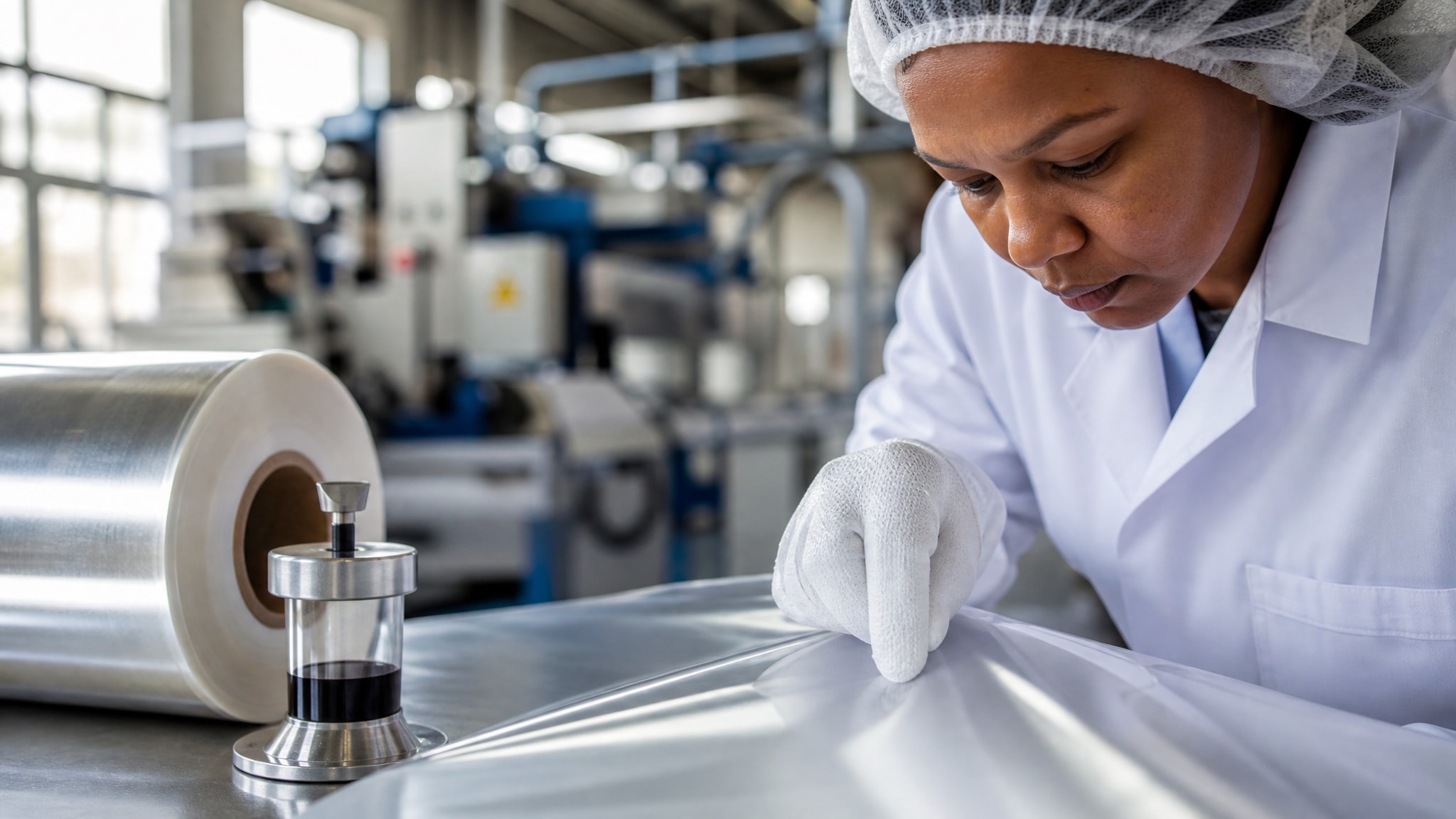
Discipline on the factory floor prevents contamination that lab testing alone won't catch once production is finished. Dedicated food-safe zones keep food packaging runs physically separate from industrial or chemical jobs, removing the risk of solvent carryover or particulate contamination during changeovers. Expect your printer to describe specific hygiene protocols, not offer vague reassurance about cleanliness.
Low-migration ink protocols need more than certified consumables. They need calibrated curing systems and regular maintenance to ensure the ink fully polymerises. Incomplete curing leaves reactive monomers on the surface that can transfer to food even when the ink formulation is compliant on paper. These controls are what turn food safety theory into practice, and they're what separates specialists from generalists.
Traceability systems have to link every production batch back to specific ink lots, substrate rolls and machine operators, so audits hold up. When a retailer or regulator asks for documentation weeks after delivery, how you respond depends entirely on how rigorously your printer kept those records during a busy production run. Solid traceability turns compliance from a policy statement into something you can actually prove.
Custom Food Carton Printing Options for FMCG Brands
Structural design and finish selection have to satisfy shelf appeal and functional protection without compromising food safety. Embossing or spot varnish lift brand perception but add variables that need validating within your compliance framework. You need a partner who understands that aesthetic choices carry technical consequences, and who can advise on safe execution rather than just producing whatever artwork lands on their desk.
Folding carton design affects product protection as much as visual communication, especially for fragile or moisture-sensitive food items. Structural integrity testing confirms your chosen format survives distribution logistics while keeping the seal intact through the supply chain. Our article on choosing a custom folding carton supplier goes deeper on matching structure to product characteristics.
Balancing premium presentation with strict safety requirements takes real experience with food-grade finishing materials. Some high-gloss coatings look brilliant on shelf but lack the migration certification needed for indirect food contact. Knowing which finishes deliver both impact and compliance saves development time, and it avoids the last-minute substitutions that water down your brand identity.
Food Safe Label Printing Solutions for Diverse Products
Label performance depends on matching face stocks and adhesives to whatever your product actually goes through, from filling to consumption. Refrigerated products need adhesives that hold bond strength at low temperatures without turning brittle; ambient goods stored in humid environments need moisture-resistant liners so the edges don't lift. Tell your printer the full storage and distribution profile, so material recommendations address real conditions rather than a lab ideal.
Legibility is a safety issue as much as a branding one, because consumers rely on label information for allergen warnings and usage instructions. Ink adhesion failures or substrate degradation that obscures critical text creates regulatory exposure even when the pack itself is structurally fine. Good label material science means understanding these failure modes before they happen in market, not reacting once a complaint lands.
Crossover products in household and personal care categories bring their own labelling challenges when sold next to food items. Retailers often mandate food-safe label construction for these products, to prevent contamination scenarios where a shopper handles both categories in one basket. Deal with this before launch, and you demonstrate category expertise instead of hitting a listing delay after the fact.
Evaluating Production Capacity and Turnaround Times
Mid-tier FMCG brands typically need production runs between 2,000 and 50,000 units, balancing cost efficiency against inventory flexibility. That volume sits awkwardly between large-scale web printers built for millions of units and digital shops geared for hundreds, which is why specialist capability matters for consistent service. A local packaging partner for FMCG brands whose equipment and scheduling match your actual order pattern will serve you better than a supplier built for a different scale entirely.
Reliable scheduling matters more than quoted speed, because a missed deadline disrupts your whole supply chain regardless of how fast any single job runs. Established brands value turnaround times that fit their planning cycles over aggressive promises that slip during peak periods. Honest talk about capacity constraints builds more trust than optimism that collapses under pressure.
Capacity evaluation should cover contingency planning too, for rush orders and the seasonal volume spikes common in food retail. A printer's ability to handle urgent requirements without cutting corners on food safety protocols says more about its maturity than any marketing claim. Ask about their worst-case response, not just their best-case turnaround.
Partnering with a Specialist Packaging Supplier for Food Brands
Choosing a long-term packaging partner takes proper verification, both technical capability and whether their standards match yours. Ask for compliance documentation and physical sample packs before you commit, and use them to check print quality, material feel and finishing precision against your own benchmarks. That hands-on check tells you whether a supplier's stated expertise shows up in the actual output.
Vetting should go beyond the first samples. Talk to reference clients running under similar regulatory pressure. How a potential partner handles problems, communicates delays and manages compliance updates tells you more about fit than any sales presentation. Honesty about limitations, and recommendations you can trust, are what a relationship needs to survive the market's inevitable ups and downs.
Food packaging compliance isn't an optional add-on at Gateway. It's the framework behind everything we produce.
Brands chasing the lowest possible unit cost with no regard for regulatory infrastructure will find that elsewhere; our processes put safety and consistency ahead of marginal price cuts. That's what lets you defend the packaging confidently to regulators, retailers and consumers alike.
Understanding your specific requirements is the starting point for any packaging relationship worth having. Learning how to brief your packaging printer turns your food safety needs into specifications a supplier can actually price against. Once your compliance parameters and volumes are clear, getting an accurate custom packaging quote becomes a straightforward next step.