Folding Carton Vs Rigid Box Packaging: Which Suits You?
Selecting the right primary packaging for a new product launch or range expansion means balancing shelf appeal with operational reality. For established FMCG brands producing between 2,000 and 50,000 units, the choice often narrows to folding carton vs rigid box packaging. Both formats serve distinct purposes. Confusing them leads to either eroded margins or missed premium positioning.
This decision affects your unit economics, warehouse capacity, and speed to market far more than aesthetics alone. Understanding the technical and commercial differences means you specify a format that supports your brand's price point without compromising supply chain efficiency.
Defining Folding Cartons and Rigid Boxes for FMCG Brands
The fundamental difference lies in how each format is constructed, shipped, and assembled at the packing line, and that structural distinction dictates everything from filling speed to storage costs.
Structural Differences and Assembly
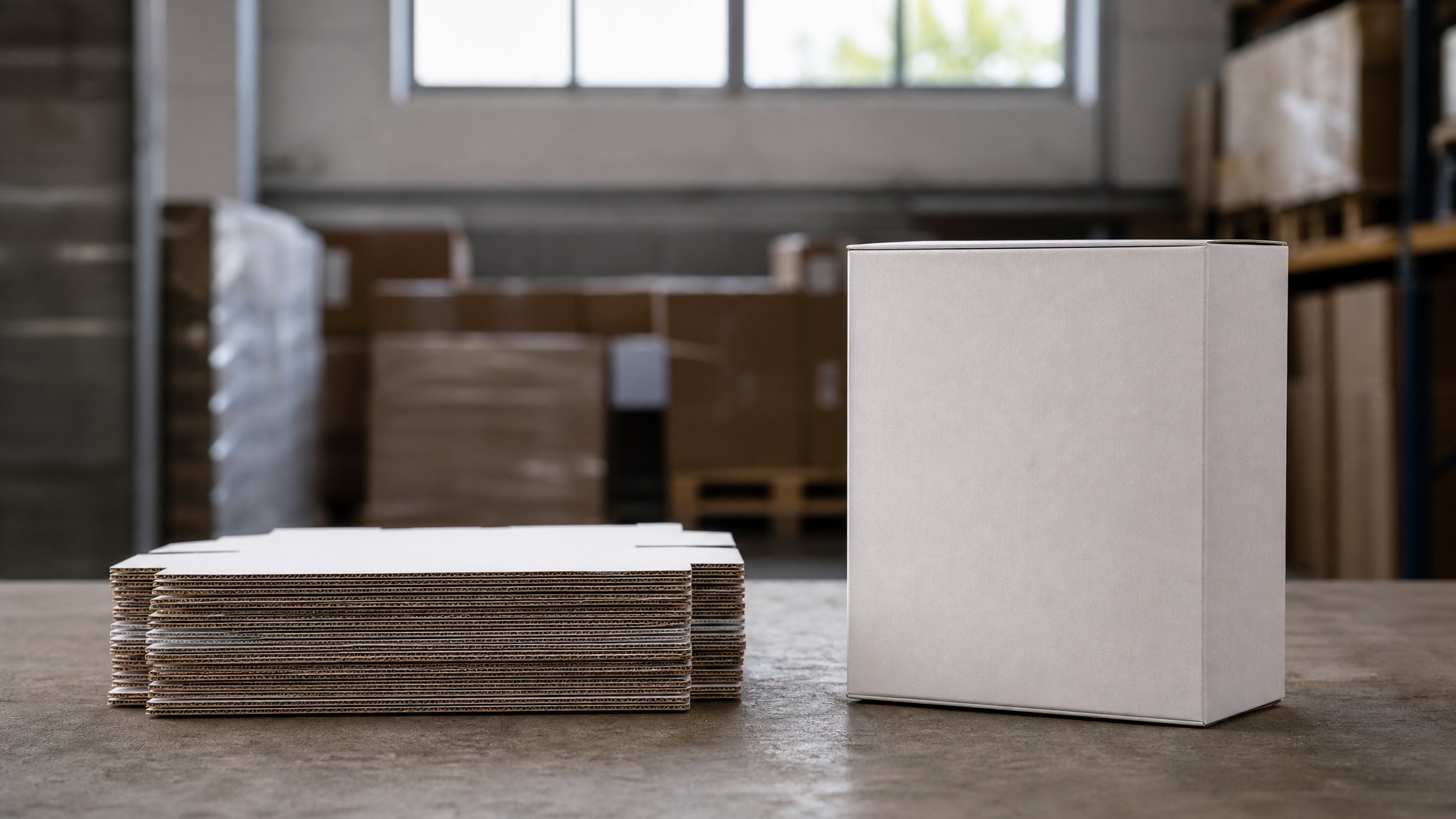
Folding cartons are made from paperboard, die-cut, creased, and delivered flat to your facility or contract packer. Automated gluing machines erect these boxes at high speed, which suits high-volume production lines where throughput matters. Rigid boxes arrive pre-assembled and cannot be flattened without destroying their structure.
Rigid boxes typically need 4x to 6x more warehouse storage volume than equivalent folding cartons, because they can't be shipped or stored flat. That volumetric inefficiency carries through to manual packing too: staff have to place products into fixed containers rather than feeding components through automated erection equipment.
Material Composition and Weight
Folding cartons use solid bleached sulphate (SBS) or coated unbleached kraft board, typically 300gsm to 600gsm depending on product weight and protection needs. These materials give most cosmetics, nutraceuticals, and personal care items enough rigidity while staying light enough to keep freight costs down.
Rigid boxes use dense chipboard wrapped in printed paper or specialty substrates. That build gives them a substantial feel that signals luxury, but it adds weight. You'll find this construction necessary for heavy glass bottles or high-value gift sets, though it pushes shipping costs up considerably compared with carton board.
Carton Packaging Cost Comparison for Mid-Volume Runs
Mid-sized brands frequently over-specify rigid packaging for core range SKUs. That erodes margins unnecessarily, since advanced carton finishing techniques can achieve the same unboxing experience. A proper carton packaging cost comparison has to account for total landed cost, not just the unit price of the box.
Unit Price vs Total Landed Cost
For a 10,000-unit run of cosmetic serums, a folding carton with soft-touch lamination often achieves a similar shelf premium to a rigid box at roughly one-third of the total landed cost, once storage and assembly labour are factored in. The rigid box may have superior tactile qualities, but those qualities come with logistical expenses that compound across every production cycle.
Your finance team needs visibility on these hidden costs before signing off on specifications based on sample aesthetics alone.
Tooling and Setup Investments
Both formats need custom tooling, but the investment profile differs substantially for runs between 2,000 and 50,000 units. Folding carton dies are relatively inexpensive and quick to produce, which allows economical short runs and faster design iterations during development.
Rigid box tooling involves complex wrapping jigs and moulds that cost significantly more and take longer to make. That higher upfront commitment makes rigid boxes less forgiving if your initial volume forecasts prove optimistic, or if you need to adjust dimensions after market testing.
Storage and Logistics Implications
Warehouse space carries real cost, especially when you're managing multiple SKUs across seasonal ranges and core products. Flat-packed folding cartons let you store months of packaging inventory in the footprint that rigid boxes would consume in weeks.
Freight costs follow the same logic. Transporting air-filled rigid boxes from supplier to packing facility burns budget that flat carton shipments preserve, and these logistics savings compound over time to affect your gross margin per unit sold directly.
Perceived Value and Premium Packaging Options for Brands
Consumer perception drives price acceptance, and packaging format plays a central role in establishing that perceived value before the product is even opened. Understanding how packaging design influences buying decisions helps you match format to brand positioning without overspending on structural upgrades you don't need.
Shelf Impact and Unboxing Experience
Rigid boxes deliver immediate tactile authority through their weight, precise edges, and seamless wrapped construction, the kind of build consumers associate with luxury goods. This format works well for gift sets, limited editions, and ultra-premium tiers, where the unboxing ritual justifies a higher price point.
Folding cartons can achieve considerable shelf presence through intelligent design, though they lack the inherent heft of wrapped chipboard. Perceived value comes from cohesive brand execution, not structural mass alone.
Print Finishes and Embellishments
Modern carton board takes sophisticated finishes well, including soft-touch lamination, foil blocking, spot UV, and embossing, and these narrow the sensory gap with rigid boxes. They perform reliably on SBS and kraft substrates, which lets mid-volume brands signal premium quality without committing to rigid box pricing.
Rigid boxes offer different embellishment options through specialty wrap papers, magnetic closures, and ribbon inserts that folding cartons can't replicate. Your choice should reflect whether your target customer values tactile luxury or visual sophistication at the point of sale.
Production Turnaround and Supply Chain Reliability
Launch deadlines and replenishment cycles demand predictable lead times, particularly when you're managing cash flow across multiple product launches. Packaging for mid-volume runs needs suppliers who can balance quality with responsive production scheduling.
Lead Times for Custom Printing
Folding cartons typically move from artwork approval to delivery within three to five weeks for standard specifications, which supports faster response to market demand or promotional opportunities. That agility suits brands that need to adjust packaging messaging seasonally or react to competitor activity.
Rigid box manufacturing involves additional hand-finishing steps that extend lead times to six to ten weeks or longer during peak periods. Factor this extended timeline into your launch planning, and keep higher safety stock levels to avoid stockouts.
Minimum Order Quantities and Flexibility
Established brands running 2,000 to 50,000 units benefit from folding carton suppliers who accommodate mid-volume MOQs without punitive surcharges. That flexibility lets you test new products or regional variants without committing to excessive inventory.
Rigid box manufacturers often set higher minimums because of setup complexity, which makes them less suitable for experimental SKUs or niche markets. When getting an accurate custom packaging quote, specify your exact volume requirements so you can identify suppliers whose capabilities match your production scale.
Rigid Box Packaging South Africa: Local Sourcing Considerations
South African brands face specific supply chain dynamics that affect format availability and lead times for both packaging types. Local rigid box capacity remains limited compared with folding carton infrastructure, which shapes sourcing strategy for mid-sized producers.
Importing rigid boxes brings currency volatility, extended transit times, and customs complexity that domestic folding carton suppliers don't. Many established brands find that local carton converters respond faster for core ranges, while reserving imported rigid boxes for flagship products where the premium justifies the logistical friction.
Choosing box type for products in this market takes an honest look at local capability versus import risk. Gateway Print & Packaging maintains relationships with both local and international partners to navigate these constraints.
Choosing Box Type for Products: A Decision Framework
Avoiding common packaging mistakes starts with aligning format choice to your actual business model, not aspirational branding. This framework helps brand managers work through the options systematically.
Matching Format to Price Point
Products retailing below R300 rarely justify rigid box economics unless the packaging itself is part of the product offering. Folding cartons with the right finishes deliver appropriate perceived value while preserving margin for marketing spend and distribution costs.
Ultra-premium products above R800 benefit from rigid box construction, because customers expect tangible quality signals at that price tier. The middle ground between R300 and R800 needs careful testing, as consumer expectations vary significantly by category and retail environment.
Sustainability and End-of-Life
Folding cartons made from FSC-certified board recycle easily through standard municipal streams, which supports brands with explicit sustainability commitments. Their lightweight construction also reduces transport emissions across the supply chain.
Rigid boxes present recycling challenges because of the adhesive bonds between chipboard and decorative wraps, though some specialist facilities now accept them. If end-of-life recyclability matters to your customers, verify local infrastructure before specifying rigid formats for environmentally sensitive markets.
Partnering for Packaging Success
The right packaging partner advises on both formats honestly, rather than pushing whichever solution suits their own equipment. Gateway provides physical mockups for both folding cartons and rigid boxes, so you can validate perceived value and structural integrity before committing to full production tooling.
Our packaging mockup services let you hold both options in hand, compare them against your product, and gather stakeholder feedback before placing orders. Request a comparative quote to see how each format performs against your specific volume, timeline, and budget.