Custom Packaging Boxes for Skincare Brands South Africa
A skincare carton is often the first thing a customer touches, and it does most of the work of telling them what the product is worth. Get the structure wrong and the product rattles, the dropper catches or the box scuffs on the shelf. Get the finish wrong and a premium serum looks ordinary.
This article is for brand and packaging managers planning custom packaging boxes for skincare ranges in South Africa. It covers structure, finishes, board, compliance and how to brief a supplier. It is written around Gateway's typical print runs of 2,000 to 50,000 units, so it suits established brands rather than small hand-finished gift runs.
What Custom Packaging Boxes Need to Do for Skincare Brands
"Custom" here means a bespoke dieline, print and finish, not a stock box with a sleeve or sticker added. A dieline is the flat cutting template for the carton. When it is drawn around your product, the fit, the panel layout and the opening all follow from it.
A skincare carton has three jobs:
- Protect the product. It must survive warehouse handling, courier transit and retail shelves without crushing the pack inside.
- Carry the required information. Directions, ingredients, batch details and barcodes all need a panel that stays legible after folding.
- Signal the product tier at a glance. Board, finish and structure tell a shopper whether this is an everyday moisturiser or a prestige treatment before they read a word.
The jobs compete. A heavy foil panel that signals quality can swallow the space you need for regulatory text, so decide the order of priority early.
This article covers folding cartons only, the secondary pack. If you are still choosing the label for the bottle or jar itself, start with our guide to label materials for cosmetics packs. Some products in a range may not need a carton at all, and it is worth reading about when a self-adhesive label does the job without a carton before you commit to one.
Rigid Box vs Folding Carton for Skincare Products
For most mid-volume skincare runs, a printed folding carton is the sensible choice, because it balances cost, print quality and shipping weight. A rigid box is the right call in fewer cases than most briefs assume.
If you want the full structural trade-off, we have the folding cartons and rigid boxes compared in detail. What follows is the skincare-specific decision.
When a Folding Carton Does the Job
A folding carton weighs less than a rigid box, so it costs less to ship. It also arrives flat, which means pallets hold more cartons and your packing line erects them as needed. Storage space in your own warehouse matters here too.
Print quality is not the compromise people expect. Offset-printed board takes fine detail, accurate colour and the full range of finishes covered below. A well-built carton with a considered finish reads as premium on a pharmacy or department-store shelf.
Choose a folding carton for core ranges, repeat-order lines, serums, creams, cleansers and anything that moves through a standard packing line.
When a Rigid Box Justifies Its Cost
A rigid box earns its place in three situations: gift sets, prestige launches and heavier products where the extra protection and shelf presence are part of what the customer is paying for. It carries a higher unit cost and a longer lead time, so the price point has to carry both.
Be honest about the alternative. If your product retails at a mid-market price and sits in a standard line, a rigid box is overkill. It will add cost and delay without adding value your customer will notice, and a well-finished carton will serve you better.
Structural Design: Building the Carton Around the Product
Settle the structure before the artwork. Once the dieline is approved, panel positions, barcode placement and fold lines are fixed, and a late structural change means re-laying out every affected panel.
Measure the Full Pack, Not Just the Container
Internal dimensions must clear the whole pack: the closure, the dropper or pump, and any insert. The container body alone is the wrong measurement.
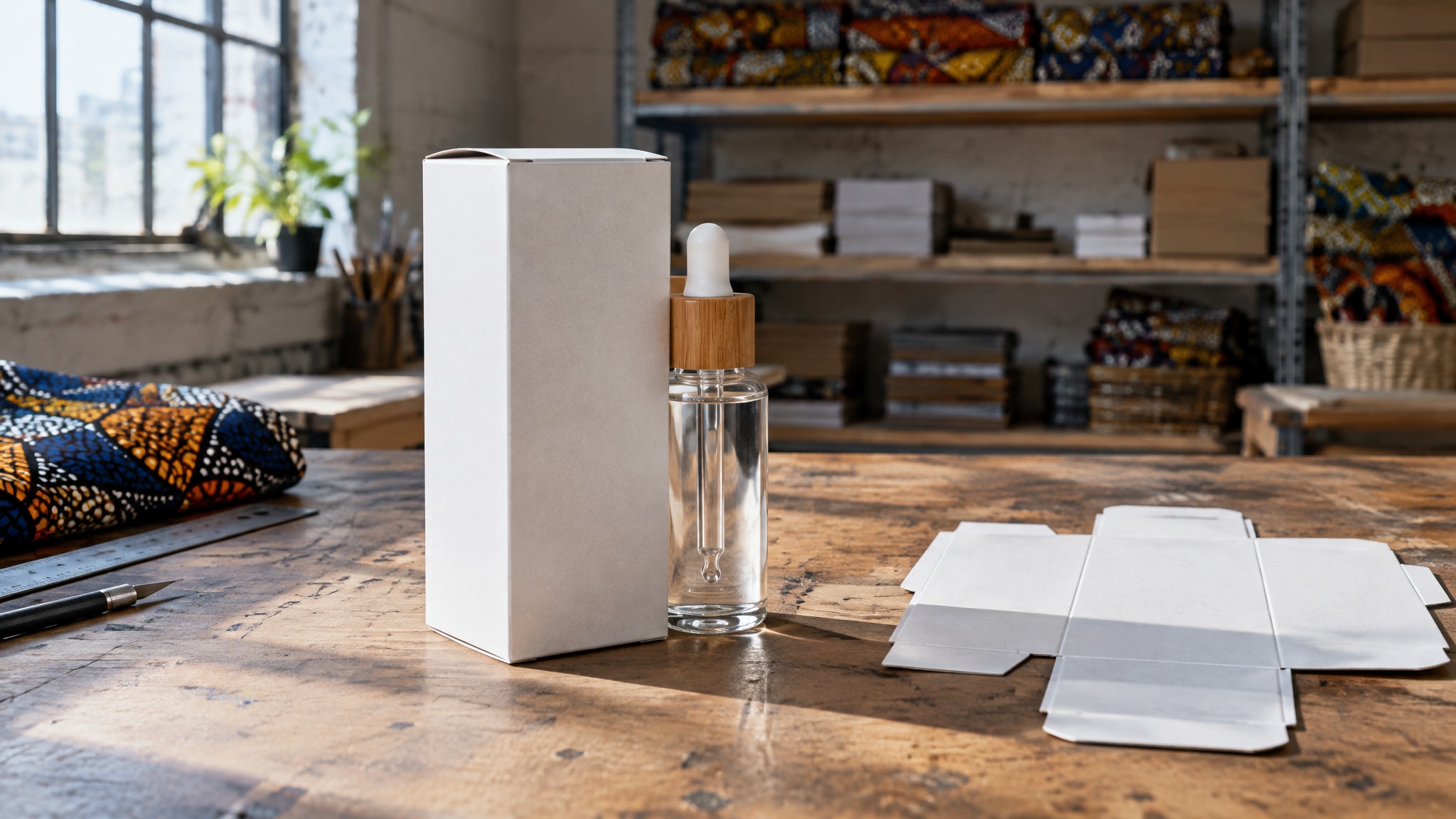
A common fit problem is a carton sized to the bottle body but not to the dropper or pump height. It only shows once the product is inserted, and by then the artwork is often approved. As an illustration, a 30 ml serum with a tall dropper can look fine on paper and still force the carton shut, bending the top panel.
Give your printer the filled, closed product and ask for a physical mock-up before artwork is finalised. Gateway supplies product mock-ups alongside folding cartons, so you can check structure, fit and finish on a real sample before committing to a full run. A sample catches the problem for the cost of one piece, not 10,000.
Closures, Inserts and the Opening Experience
Match the structure to the product and the line. Tuck-end and reverse-tuck cartons suit everyday products that are erected and closed by hand. Crash-lock bottoms, also called auto-lock, arrive glued flat and spring open when erected, which speeds up hand packing and suits machine erecting. Tell your printer how your line works so the bottom style fits it.
Inserts hold the product still and stop it knocking against the walls. Add one if the pack is heavy, glass or has a pump that could be pressed in transit.
Where the opening should feel deliberate, a sleeve-and-tray format works well. The tray slides out of the sleeve, so the customer opens the pack in two movements rather than one. It costs more than a tuck-end carton, so it belongs on the products where that moment matters.
Luxury Packaging for Beauty Brands: Premium Finishes That Earn Their Cost
Every premium finish adds perceived value, and every one also changes cost, lead time and durability. If you are planning luxury packaging for beauty brands, the question is which finishes earn their place on a given carton, not how many you can fit.
Surface Finishes: Matte, Gloss and Soft-Touch
Choose the surface first and tie it to the shelf signal it sends.
- Soft-touch feels premium in the hand but can show scuffs.
- Gloss reads bright and clean but can show fingerprints.
- Matte suits understated, clinical or natural ranges.
On a dark board, a gloss or soft-touch laminate shows scuffs and fingerprints more readily than on a light board. If your range is handled heavily at retail, test the finish on the actual stock, not on a swatch of something similar.
Each option changes cost and lead time, and some laminates affect recyclability. Confirm the coating with your printer before you fall in love with it.
Foil, Embossing and Spot UV: Use With Restraint
Treat foil, embossing and spot UV as accents, with one or two per carton at most. A logo in foil is distinctive. Foil on the logo, the border, the product name and the ingredient heading is just noise.
These effects also make fine type harder to read if the design does not allow for them. Keep small text clear of foil areas and fold lines, because foil can fill in thin strokes and a fold can crack a coating across a letter.
Test every effect on the actual board before approval. A finish that looks sharp on a coated proof can behave differently on the uncoated or textured stock you have chosen.
Premium Skincare Carton Printing: Board, Colour and Consistency
Board grade, weight and surface come first, because they shape print results and how the carton folds. A board that is too light bows under a heavy bottle, and one that is too thick can crack along the score lines. Your printer can advise on the right grade once they know the product weight and the finishes you want.
Colour consistency across reprints rests on three things:
- an agreed colour reference before the first run
- an approved press proof
- the same board stock for every run
Change any one and the brand colour can drift. A cream carton printed on a slightly different board will not match the original, even with identical ink. That matters most when cartons from two runs sit side by side on one shelf.
If you are still comparing options for premium skincare carton printing, this is where a good supplier shows up. Read our advice on how to vet a custom folding carton supplier, and for brands going the white-label route, our look at private label skincare packaging suppliers in South Africa.
Board Choice and Recyclability
Flag plastic windows and heavy laminates at brief stage. Both can affect whether the carton is accepted for recycling, and changing them after proofing costs time.
Ask about FSC-certified board options as well. If sustainability claims are part of your brand story, you need to know the board supports them before the claim appears on the pack.
Compliance and Barcodes for Custom Cosmetic Boxes in South Africa
Mandatory information on custom cosmetic boxes in South Africa should be confirmed against the current labelling rules under the Foodstuffs, Cosmetics and Disinfectants Act and its regulations. Your regulatory adviser should sign off the wording, not the designer and not the printer. We print what you approve, and we cannot give legal sign-off on claims.
Barcodes are issued through GS1 South Africa. Keep them clear of folds and glue flaps, because a scanner cannot read a code that is creased or partly covered by adhesive. Leave them until the end of artwork and they tend to land in whatever space is left, which is usually the wrong place.
Common Artwork Errors That Lead to Reprints
Most avoidable reprints come from a few repeat causes:
- barcodes placed across a fold or under a glue flap
- regulatory text added after the layout was approved
- panels checked against an old version of the dieline
- structural changes made after artwork was signed off
Late structure changes are the most expensive. Check every panel against the approved dieline and fold lines before sign-off, and have one person own that check. For more on the causes and the prevention, see our guide to avoiding costly packaging reprints.
How to Brief a Skincare Box Packaging Supplier
A complete brief gives you the most accurate quote and the most reliable schedule. A vague one leads to assumptions, and assumptions lead to revised quotes.
A complete brief includes:
- product dimensions, with closure, dropper or pump and any insert
- closure type and bottom style
- run size
- finish ideas, even if they are not final
- artwork status
- launch date
Cost and lead time rise with structural complexity, finish count and the number of proofing rounds. The simplest savings are one signature finish rather than three, and a shared structure across the range so that one dieline serves several products. If you want more detail, our guide explains how to build an accurate brief before requesting a quote.
If you are planning 2027 launches, the structure review is best done now, before artwork is locked and before the busy calendar fills. Send Gateway your carton brief with product dimensions, closure type, run size, finish ideas and artwork status. We will review the structure and come back with a dated quote, so your decisions rest on a real sample and a real schedule.
Frequently asked questions
Is a rigid box worth it for a skincare range?
Only when the price point, gifting role or product weight justifies a higher unit cost and a longer lead time. Gift sets, prestige launches and heavy glass products are the usual cases. For standard mid-volume lines, a well-finished folding carton does the job for less.
How do I make sure the carton fits my dropper or pump bottle?
Measure the closed, filled pack including the dropper or pump and any insert, not just the bottle body. Then ask for a physical mock-up and test the fit before artwork is finalised. Changing the dieline afterwards means re-laying out the panels.
Which premium finish should I choose first?
Pick the surface first: matte, gloss or soft-touch, depending on the shelf signal you want. Then add one or two accents such as foil or spot UV at most. Test them on the actual board, because each one changes cost, lead time and durability.
How do I keep colour the same across reprints?
Agree a colour reference before the first run and approve a press proof. Use the same board stock for every reprint, because a different board can shift how the colour looks even with identical ink.
Who signs off the wording and barcodes on a skincare carton?
Your regulatory adviser should approve the mandatory information against current South African cosmetic labelling rules. Barcodes come through GS1 South Africa. Your printer then checks that each barcode sits clear of folds and glue flaps on the approved dieline.