Cosmetic Packaging Supplier South Africa: Vetting Checklist
Choosing a cosmetic packaging supplier in South Africa is one of the more consequential decisions a beauty or skincare brand makes. Packaging is the first physical touchpoint a customer has with your product, and it carries a good deal of your brand's credibility on shelf. Yet many brand owners approach the search price-first, only to find that the cheapest quote comes with the highest hidden cost. This checklist covers the practical criteria that separate a reliable partner from a risky one.
Why Choosing the Right Cosmetic Packaging Supplier in South Africa Matters
Packaging decisions affect every part of a beauty business, from production timelines to customer trust. A supplier that misses deadlines, prints inconsistent colours, or doesn't understand cosmetic compliance can cost far more than the invoice suggests.
What's at stake for skincare and beauty brands
A poor packaging partner shows up in ways that are hard to reverse once stock is on shelf:
- Reprints because colours drifted between production runs, forcing brands to pulp stock and start again.
- Launch delays when a supplier underestimates lead times or lacks capacity for the finish you specified.
- Inconsistent colour across a product range, which undermines the premium look skincare and cosmetic brands work hard to build.
- Damaged shelf presence when cartons or labels look flat next to competitors using foiling, embossing, or spot UV.
Every one of these problems is preventable with proper vetting upfront. That's why a structured checklist matters more than a quick price comparison when selecting a cosmetic packaging supplier in South Africa that a brand can rely on for the long term.
Quality: What to Look for in Beauty Packaging South Africa
Quality isn't a single attribute. It's print finish, material consistency, and process discipline together. Beauty brands in South Africa are competing in a crowded retail environment, so the margin for error is small.
Print finish and embellishments
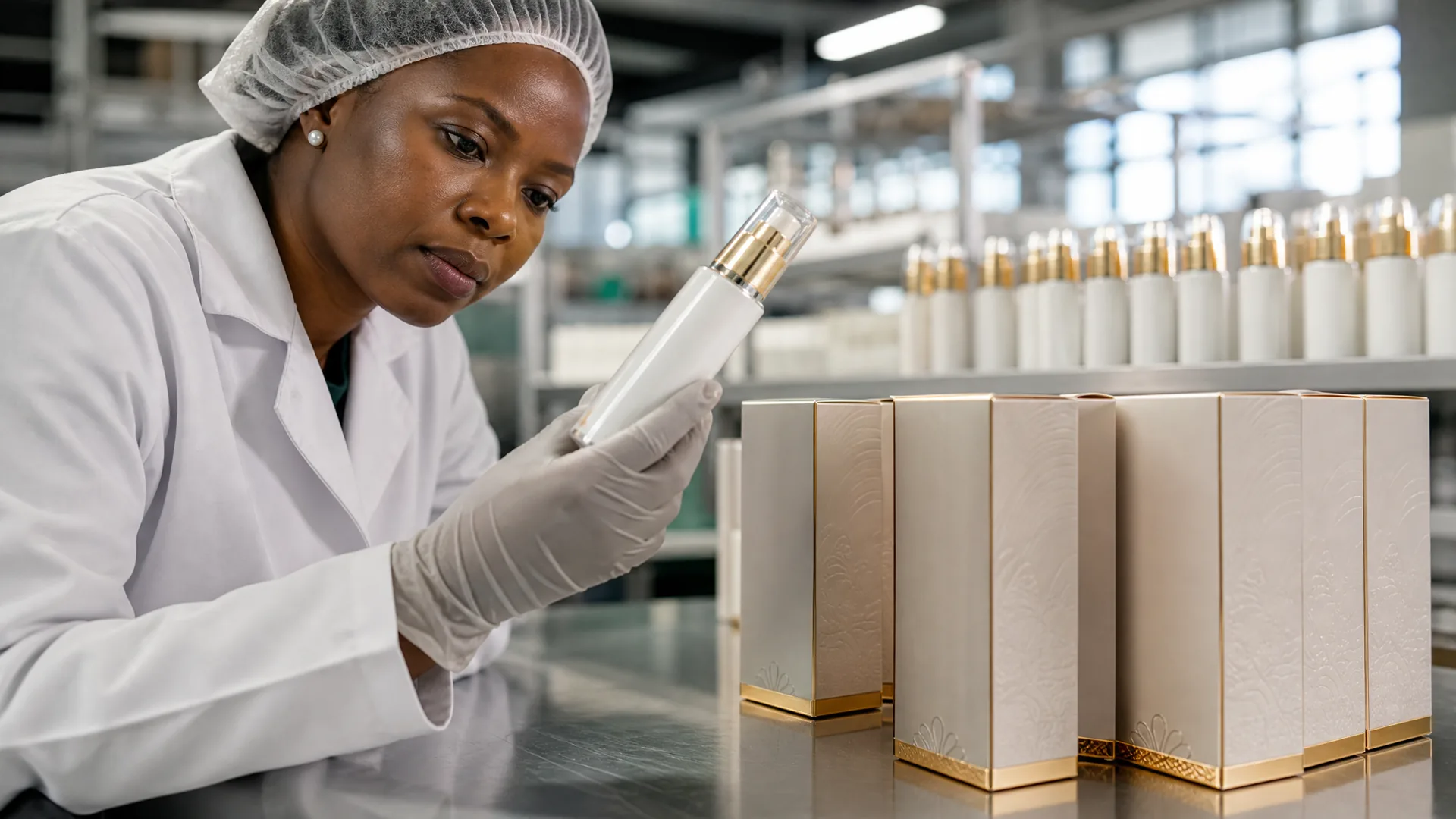
Premium cosmetic packaging design increasingly relies on embellishments to stand out: foiling, embossing, spot UV, soft-touch laminates, textured stocks. A skincare brand switching from a generic label converter to a supplier offering foiling and spot UV can lift shelf presence without changing the formulation or the price point. That's a meaningful return for a modest cost increase per unit.
When assessing a supplier, ask to see physical samples of their embellishment work rather than digital mockups. Foiling that lifts or peels, or spot UV that isn't registered accurately, tells you more about a supplier's process control than any sales pitch will.
Material and substrate consistency
Substrate choice affects durability, print clarity, and how a label performs against oils, moisture, or refrigeration. A supplier should be able to explain why they'd recommend one material over another for a particular product, for example a durable film label for a bathroom-shelf product versus a paper stock for a dry retail item. If you're deciding between formats, it's worth understanding the trade-offs covered in guides on vinyl labels for cosmetic products and roll labels for bottles, both common formats for skincare and cosmetic ranges.
Consistency across runs matters just as much as the initial sample. Brands expanding from a single hero SKU to a full range often discover too late that their original packaging supplier can't match Pantone colours consistently across separate print runs. That's a vetting criterion that's easy to overlook until it becomes a problem.
Compliance Checks for Cosmetic Label Printing and Cartons
Compliance isn't negotiable, and it's an area where an inexperienced supplier can unknowingly put your brand at risk. Cosmetic label printing carries regulatory obligations that differ from general consumer goods.
Ingredient and labelling requirements
Most cosmetic and personal care packaging in South Africa must reflect labelling requirements covering ingredient listing, net content, and manufacturer traceability before it can legally go to retail. A supplier experienced in cosmetic packaging should flag missing information on your artwork before it goes to print, not after cartons have shipped. That kind of proactive check is a strong signal that a supplier understands the category, rather than treating your job as generic print work.
Barcode and traceability basics
Retailers and distributors expect scannable, correctly formatted barcodes on cosmetic cartons and labels. A supplier should verify barcode placement, size, and contrast during pre-press, catching errors that would otherwise only surface at a retailer's goods-in inspection. Traceability details, such as batch coding space and manufacturer information, should be built into the layout from the start, not squeezed in as an afterthought.
MOQs and Production Runs: Matching Supplier Capability to Your Brand Size
Minimum order quantities are one of the clearest indicators of whether a supplier is the right fit. For established cosmetic and skincare brands, typical MOQs for cartons and labels tend to fall somewhere between roughly 2,000 and 50,000 units, depending on format, substrate, and finish.
Gateway works with established FMCG and cosmetic brands on print runs from roughly 2,000 to 50,000 units, giving smaller brands access to premium finishes without paying for excess stock. This range matters because it sits at the point where a brand has outgrown short-run digital printing but isn't yet ready to commit to the very large volumes that offset industrial press setup costs.
A mismatch in either direction is a warning sign. A supplier whose MOQs are unrealistically low may be relying on digital-only production that can't deliver the finishes or unit economics a scaling brand needs. One whose MOQs are far higher than your current volumes may push you into overstocking, tying up cash in packaging for skincare brands that haven't yet reached that sales velocity. The right supplier should explain how their production setup scales with you, from your first retail listing through to a multi-SKU range.
Print Capability and Design Support for Custom Cosmetic Labels
Print quality is only part of the equation. The process that gets your artwork to press, and the support you get along the way, often determines whether your first run is right the first time.
In-house design vs. print-only suppliers
A print-only supplier will produce what you send them, exactly as supplied. If your dielines, bleed, or colour profiles aren't correct, you'll only find out once printed stock arrives. By then it's too late to fix cheaply.
A supplier offering genuine design and artwork support catches these issues earlier. Gateway's design and artwork support helps brand owners avoid common pre-press errors, such as bleed, dieline, and colour profile mismatches, that cause reprints and delays. For brands building or refining a full identity across custom cosmetic labels and cartons, that support is often the difference between a smooth launch and a costly one.
If you're briefing a supplier for the first time, it helps to understand what a professional packaging design service and brief requirements actually involve, so you know what to expect from a proper design handover. It's also worth reviewing how carton structure influences print outcomes if your range includes rigid or folding cartons. The construction choices covered in resources on folding carton packaging in South Africa directly affect print registration and finish options. For brands relying heavily on labels rather than cartons, it's also worth looking at broader options for custom printed product labels to understand format and material choices beyond cosmetics specifically.
A Practical Checklist for Vetting Your Cosmetic Packaging Supplier
Here is a scannable checklist for evaluating any cosmetic packaging supplier in South Africa:
- Quality, Ask for physical samples showing embellishments (foiling, spot UV, embossing) and confirm substrate options suited to your product type.
- Compliance, Confirm the supplier can check ingredient listing, net content, manufacturer details, and barcode placement before print, not after.
- MOQ fit, Match minimum order quantities to your current volumes and your realistic growth over the next 12 to 24 months.
- Print and design capability, Establish whether the supplier offers dieline creation, mockups, and pre-press checks, or whether you'll need to supply print-ready artwork yourself.
- Reliability and turnaround, Ask about typical lead times, communication during production, and how the supplier handles colour consistency across repeat orders.
The cheapest quote rarely accounts for all five. An established beauty brand has more to lose from a reprint or a delayed launch than it saves on a marginally lower unit price. That's why reliability and compliance knowledge should weigh as heavily as cost in any comparison.
If you're evaluating packaging partners for an upcoming launch or range expansion, Gateway Print & Packaging can walk you through labels, cartons, or a full packaging solution built around your brand's volumes and finish requirements. Request a quote to discuss your specifications and get a realistic view of cost, lead time, and production capability before you commit.