Packaging Reprint Errors in South Africa: How to Avoid Costs
Packaging reprints are rarely just a printing expense. They're usually a compound failure in process, communication and quality control, and they hit established FMCG brands operating at scale hardest. On production runs of 2,000 to 50,000 units, a minor artwork or specification error can trigger real financial loss, retail listing delays and regulatory non-compliance across South African markets. Preventing these reprint errors means moving beyond basic file checks to structured proofing workflows, precise colour management, and clear approval hierarchies that catch problems before plates are made.
The True Cost of Packaging Reprints for SA Brands
A single reprint cycle costs far more than the original print fee. It duplicates material costs, press time and finishing labour, and it erodes margin further through expedited freight. Your brand absorbs that loss directly, often without recovering the money already spent on stock that has to be destroyed rather than sold. Brands with multiple SKUs carry more exposure than most, because an error on one variant often points to a workflow gap that threatens the whole range.
Financial Impact Beyond Print Costs
The invoice for reprinted cartons or labels is only the visible part of the damage. The rest shows up in warehousing, distribution and retailer chargebacks. Retailers enforce strict delivery windows, so delayed stock from a reprint means penalties, or lost shelf space to a competitor who kept supply running. Internal teams also lose hours they'd rather spend elsewhere: managing the crisis, re-approving corrected artwork, arranging disposal of non-compliant stock. None of that appears on the printer's invoice, but it's a real cost.
Regulatory Risks Under SA Labelling Law
South African labelling regulations hold the brand owner strictly liable, not the printer. Incorrect allergen declarations and improperly formatted GTIN-14 barcodes are cited as critical compliance failures under South Africa's food labelling regulations, and both force immediate reprints regardless of how good the print quality is. They also expose brands to recalls and reputational damage that outweigh the cost of production many times over. Regulators don't distinguish between an honest mistake and deliberate mislabelling, so your legal team needs to check every piece of text against current legislation before a physical proof is approved.
Common File Errors That Trigger Reprints
Technical file problems remain the biggest driver of avoidable reprints, mostly because they slip through automated preflight checks and only show up once the job hits press or finishing. Insufficient image resolution, incorrect colour mode, and missing bleed are identified as primary causes of print-ready artwork failure, particularly when designers work from screen-optimised assets instead of print-specific templates.
Resolution and Colour Mode Failures
Images pulled from digital campaigns or websites rarely hit the 300 DPI minimum that litho printing needs for sharp reproduction, and pixelated product photography means redoing the artwork mid-production. RGB files sent for CMYK printing cause unpredictable colour shifts, because the press can't reproduce the wider gamut of light-based colour. That forces operators to halt the run while corrected separations are prepared. Mandate embedded CMYK profiles and high-resolution linked images on every file you supply, and you remove most of these failures before they reach prepress.
Dieline and Bleed Misalignments
Structural failures at the cutting and creasing stage usually trace back to dielines that shifted during design revisions, or bleed that doesn't extend far enough past the trim line. A misaligned dieline can send a glue tab missing its target, or expose the wrong part of the product through a window cutout, which renders thousands of cartons useless even though the print itself is perfect. Gateway Packaging identifies common FMCG mistakes ranging from file errors to compliance gaps as primary drivers of launch delays and reprint costs, and dieline discrepancies feature heavily in post-mortems of failed runs.
Implementing a Robust Packaging Proofing Process
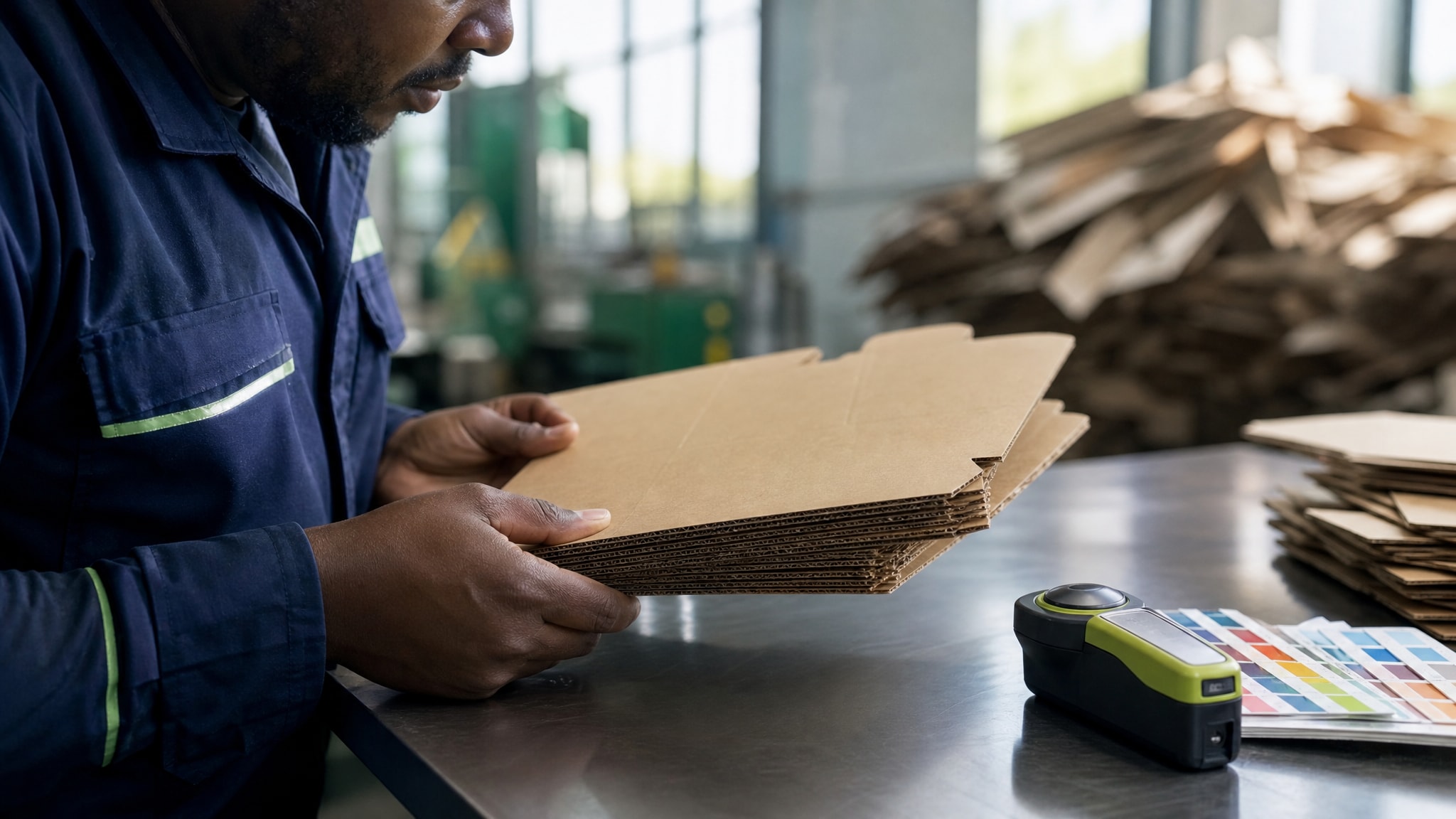
A proper packaging proofing process is different from a standard digital sign-off, because it checks things a screen can't simulate: substrate texture, ink density, finishing registration. Relying on PDF approval alone leaves your brand exposed to variables that only show up once ink meets paper. Physical verification is worth the gate for any run above minimal quantities.
Digital vs Physical Proofs
Digital proofs are fine for checking layout, typography and the accuracy of regulatory text. What they can't do is show how a specific ink behaves on uncoated stock, metallised film, or a textured label. A physical press proof, run on the actual production substrate, is the only reliable basis for colour matching and finish checks, and it's the only way to be sure what you approve is what turns up at your warehouse. For brands protecting a premium position, skipping that step to save time introduces a risk that only grows once full production has started.
Version Control and File Management
Outdated artwork reaching production is a common, avoidable cause of reprints, especially when revisions get scattered across email threads, shared drives and messaging apps with no central tracking. A disciplined file naming convention, and a single source of truth for approved artwork, stops procurement ordering v3 while marketing has already signed off v4. It's not glamorous work compared with the creative side, but it's the foundation an accurate proofing process depends on.
Mastering Colour Matching in Packaging Print
Colour behaves differently across packaging substrates, because ink absorption, surface reflectivity and the base material's tone all affect the final result in ways a digital proof can't predict. Screen colour is a guide, not a guarantee, and treating it as the latter is how brand identity drifts, run after run.
Pantone vs CMYK Consistency
Brand colours specified only as CMYK values will vary between runs and substrates, because process mixing tolerances accumulate differently on coated versus uncoated stock. Pantone references for critical brand elements fix that, by giving the printer an absolute colour target that can be measured and checked at make-ready. Keep a master colour standard document that separates Pantone spot colours needing an exact match from CMYK builds that are fine for secondary elements, and make that hierarchy clear on every artwork submission.
Substrate Influence on Colour Output
Different label materials and carton stocks take ink differently, and getting it right at the press needs an operator who understands the substrate, not just the file. Uncoated kraft board mutes saturation compared with white-coated stock, and metallic substrates shift hue perception altogether, so the same ink formulation can look noticeably different across your range. Packaging errors create expensive reprinting costs alongside potential legal disputes and brand damage, which is why prevention is cheaper than correction, especially once colour inconsistency gets stock rejected by a retailer that was otherwise compliant.
Structuring the Approval Process for Packaging Printing
Ambiguity over who signs off creates a real vulnerability: unauthorised runs proceed on informal confirmations or outdated messages with no proper paper trail. Define sign-off responsibility across marketing, legal and procurement, so each stakeholder checks their own domain before production starts. That closes the gap where assumption stands in for verification.
Defining Sign-Off Responsibilities
Marketing should approve visual accuracy and brand alignment. Legal validates regulatory compliance and mandatory text. Procurement confirms commercial terms and quantities. All three need to sign off before a proof gets final authorisation. Putting sign-off in one person's hands raises risk, because no one individual has the expertise to catch errors across all three areas. A sequential approval workflow, where each department signs off independently, stops commercial pressure overriding a compliance check, or aesthetic preference bypassing a technical one.
Creating an Audit Trail
Keeping signed records of every proof stage, revision request and final approval settles disputes when the delivered goods don't match expectations, and it makes future reorders faster by preserving what was agreed. Digital approval systems with timestamped signatures trace far better than email chains, and they let you get to the root cause of a problem quickly instead of relying on memory. That audit trail also shows due diligence if a regulator ever asks whether proper checks happened before the product reached the market.
Quality Control Label Printing Checks Before Dispatch
Pre-dispatch verification is the last line of defence against retail rejection. It catches the errors that slipped through earlier proofing stages because of human oversight or equipment drift over a long run. Barcode scanning, allergen text cross-referencing and colour density measurement should happen systematically on press samples before bulk packing starts, so what leaves the facility matches the approved spec exactly.
This checkpoint works by comparing production output against the master standard, not by assuming consistency because make-ready was approved. Automated vision systems can scan every unit for defects, but manual checks on the critical data points still matter, because a machine can't interpret regulatory context or judge the subjective quality threshold a retailer will enforce. The time spent at this final gate is what stops a full pallet arriving at a distribution centre only to be quarantined for a defect that could have been caught on the factory floor.
Partnering with a Specialist Packaging Supplier
General commercial printers often lack the substrate-specific knowledge and FMCG compliance experience to spot packaging failure modes before they turn into reprints. A specialist packaging partner understands how carton design interacts with filling line machinery, how label adhesives hold up in cold chain conditions, and how barcode placement affects retail scanning, and that knowledge lets them flag a problem before it happens rather than react once it has.
Expert prepress support from a dedicated packaging supplier catches things generic preflight software misses, such as too little glue flap area or not enough contrast for a machine-readable code. Giving a specialist an accurate packaging brief at the start lets them flag issues before artwork development has gone too far to adjust economically. That's a different relationship to a transactional one, where a supplier just prints whatever file it's given without questioning whether it suits the end use.
Brands looking to reduce packaging rejects and downtime do better working with a supplier who acts as part of their quality team rather than one filling purchase orders. Understanding premium packaging supplier value means recognising that a higher unit cost often reflects expertise that prevents losses far bigger than the price difference. When you're ready to put that kind of prepress expertise to work on your next run, you can request a custom packaging quote and talk through how structured proofing and quality control protect your brand from avoidable reprints.
Frequently Asked Questions
What specific file specifications prevent most packaging reprint errors?
Supply all artwork as CMYK with embedded ICC profiles, ensure raster images meet 300 DPI at final print size, and include 3mm bleed extending beyond trim lines on all sides. Provide dielines as separate spot colour layers locked against accidental editing, and outline all fonts to prevent substitution issues during RIP processing. These baseline specifications address the majority of technical failures that trigger rework before production begins.
When is a physical press proof necessary versus a digital PDF proof?
Physical press proofs are essential whenever printing on uncoated, textured, or metallic substrates where ink behaviour differs significantly from coated proofing stock. They are also mandatory for Pantone spot colour verification, special finishes like embossing or foil stamping, and any job where colour consistency across multiple substrates matters for brand integrity. Digital proofs suffice only for text validation, layout confirmation, and CMYK process jobs on standard coated materials where substrate interaction is predictable.
Who should hold final approval authority for packaging artwork sign-off?
Final sign-off should require sequential approval from marketing for brand accuracy, legal or regulatory affairs for compliance validation, and procurement for commercial specification confirmation. No single individual should possess unilateral approval authority because packaging decisions span disciplines where specialised knowledge determines correctness. Document each approval stage with timestamps and named signatories to create an audit trail that clarifies accountability if errors subsequently emerge.
How do South African labelling regulations affect reprint risk for FMCG products?
Regulations mandate accurate allergen declarations, correct nutritional information formatting, and properly structured GTIN barcodes, with non-compliance triggering mandatory reprints regardless of print quality. Brand owners bear strict liability for labelling accuracy, meaning regulatory bodies impose penalties based on market presence rather than intent or production volume. Maintaining current regulatory reference documents and validating every text element against them during proofing prevents compliance-driven reprints that carry both financial and reputational consequences.